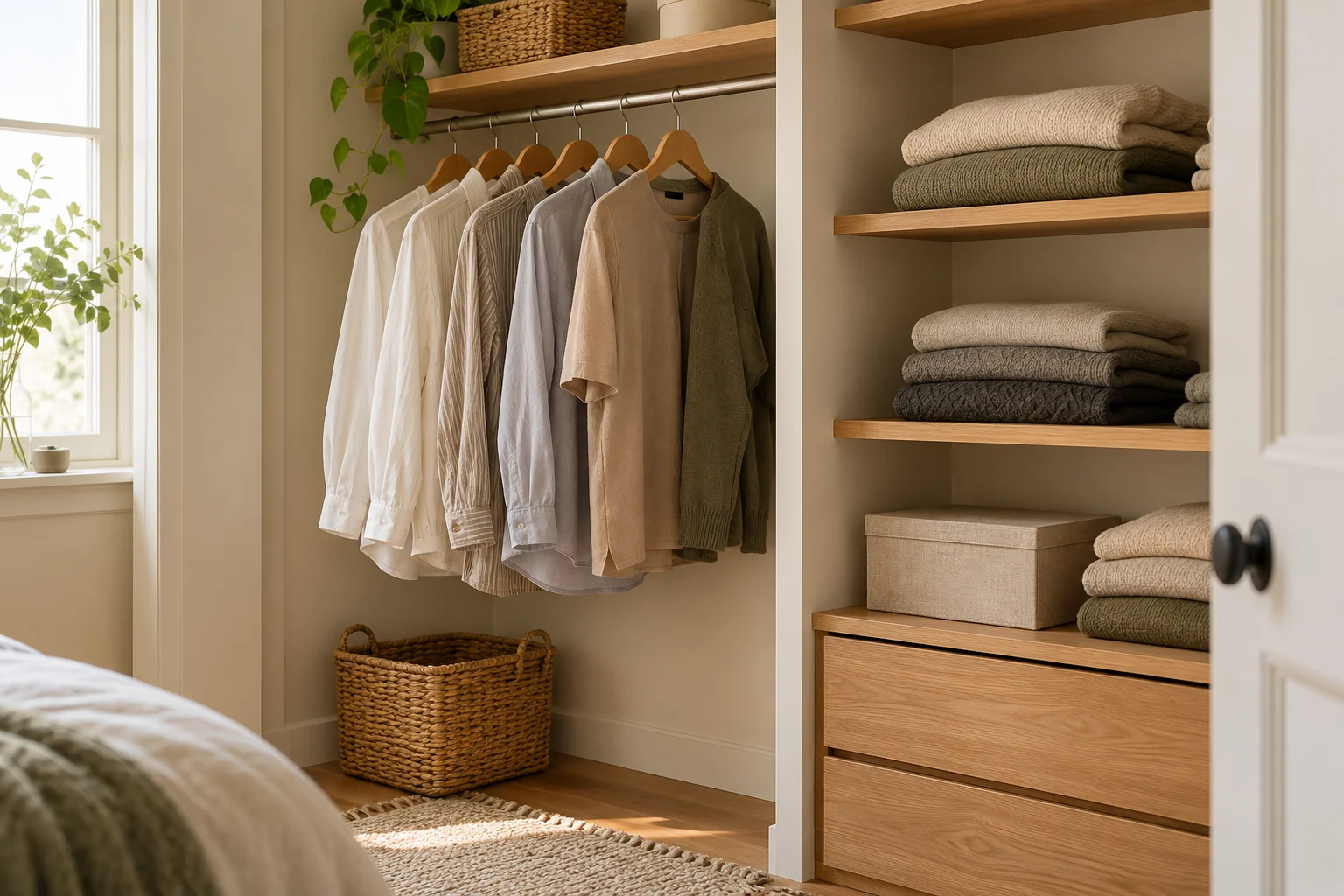
Separate front and rear storage
Measure how far you can reach without leaning into stacked objects. Use that accessible front zone for everyday clothing. Reserve rear space for clearly labeled, less frequent categories, ideally in containers that can be removed as a unit. Avoid mixing daily items between both layers.
Keep containers manageable
Use narrow, manageable bins rather than one heavy box spanning the entire shelf. Leave a clear path for pulling each container out. Where a shelf is too deep for a single folded row, place occasional items behind it only if the front row can move easily.
A front row of daily T-shirts can coexist with a rear bin of seasonal accessories if the bin has a clear handle and label. Avoid placing another daily clothing category behind the shirts.
Make hidden contents locatable
Write a short location list on the inside of the door if rear storage is hard to see. Revisit those contents during seasonal changes. If something remains forgotten because retrieval requires too much work, move it forward or reduce the amount stored there.
About our editorial approach · Created with AI assistance.