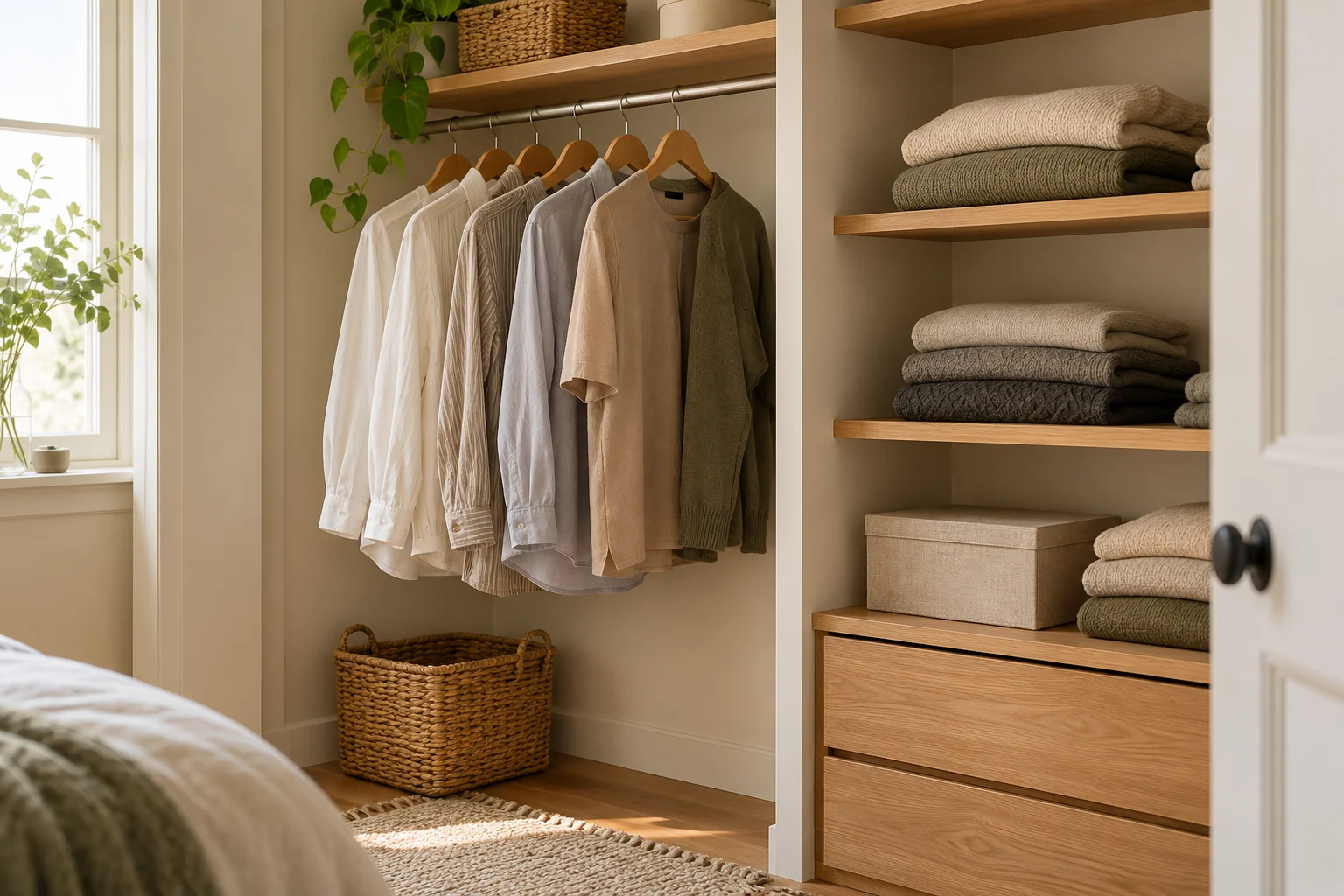
Measure both hanging levels
Measure the drop of shirts, folded trousers, and other short garments from their hanger hooks. Add the clearance needed to keep the upper row off the lower rail and the lower row off the floor. Check whether the lower garments will block shoes, drawers, or access to the back.
Reserve long-hanging space
Keep a separate single-height section for dresses and long coats. Do not fold every long piece merely to make a double-rail layout appear efficient. With an adjustable system, test the proposed positions before finalizing them. Follow the system's mounting and load instructions rather than improvising supports.
A closet containing mostly shirts and folded trousers may suit two levels, while a wardrobe dominated by long dresses may not. Allocate only the short-garment section to double hanging rather than forcing the entire closet into it.
Check lower-rail access
Hang a realistic mix on both levels and retrieve pieces from the rear corners. Make sure the upper rail is comfortably reachable. If the lower row becomes hidden or awkward to use, a shelf-and-rail combination may suit that section better than doubling the hanging space.
About our editorial approach · Created with AI assistance.