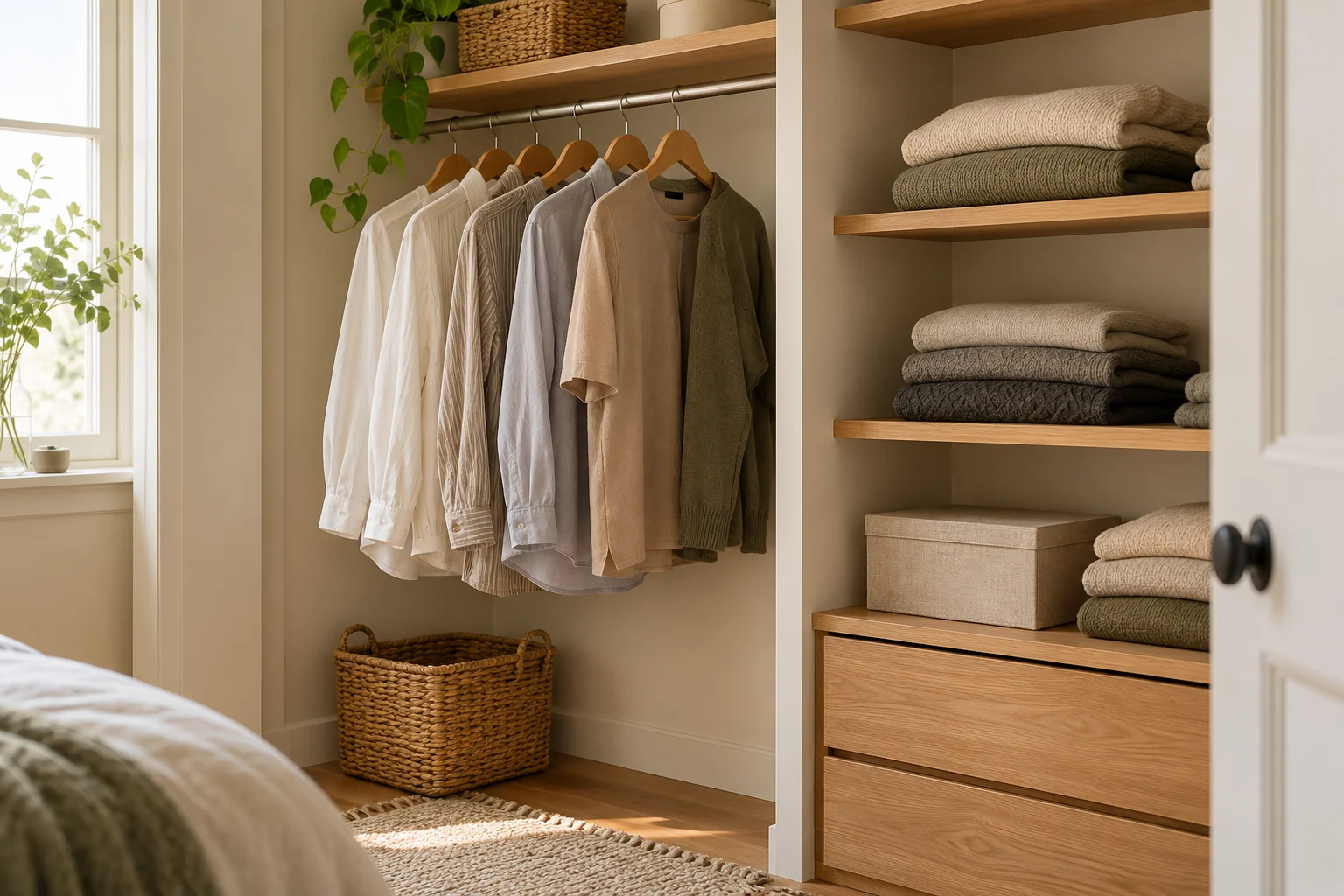
Map the accessible opening
Measure the accessible opening and identify the side areas hidden behind the wall or doors. Keep daily clothing in the section you can reach directly. Reserve concealed ends for occasional items that remain retrievable. Check hanger width and garment depth before adding storage opposite the rail.
Keep the approach shallow
Avoid placing deep bins or tall shoe units where they block the central approach. Group long garments toward one end if that frees a useful lower zone. Use shallow folded storage only where you can see and remove it without pushing hanging clothing aside each time.
If the left end is hidden by a door panel, use it for a clearly identified occasional coat rather than the shirts you choose daily. Keep the central opening available for frequent decisions.
Retrieve from both ends
Practice retrieving a garment from both ends with the doors in their normal positions. If a section requires leaning around several obstacles, simplify its contents. Narrow closets usually benefit more from clear access and fewer layers than from filling every recess with another organizer.
About our editorial approach · Created with AI assistance.