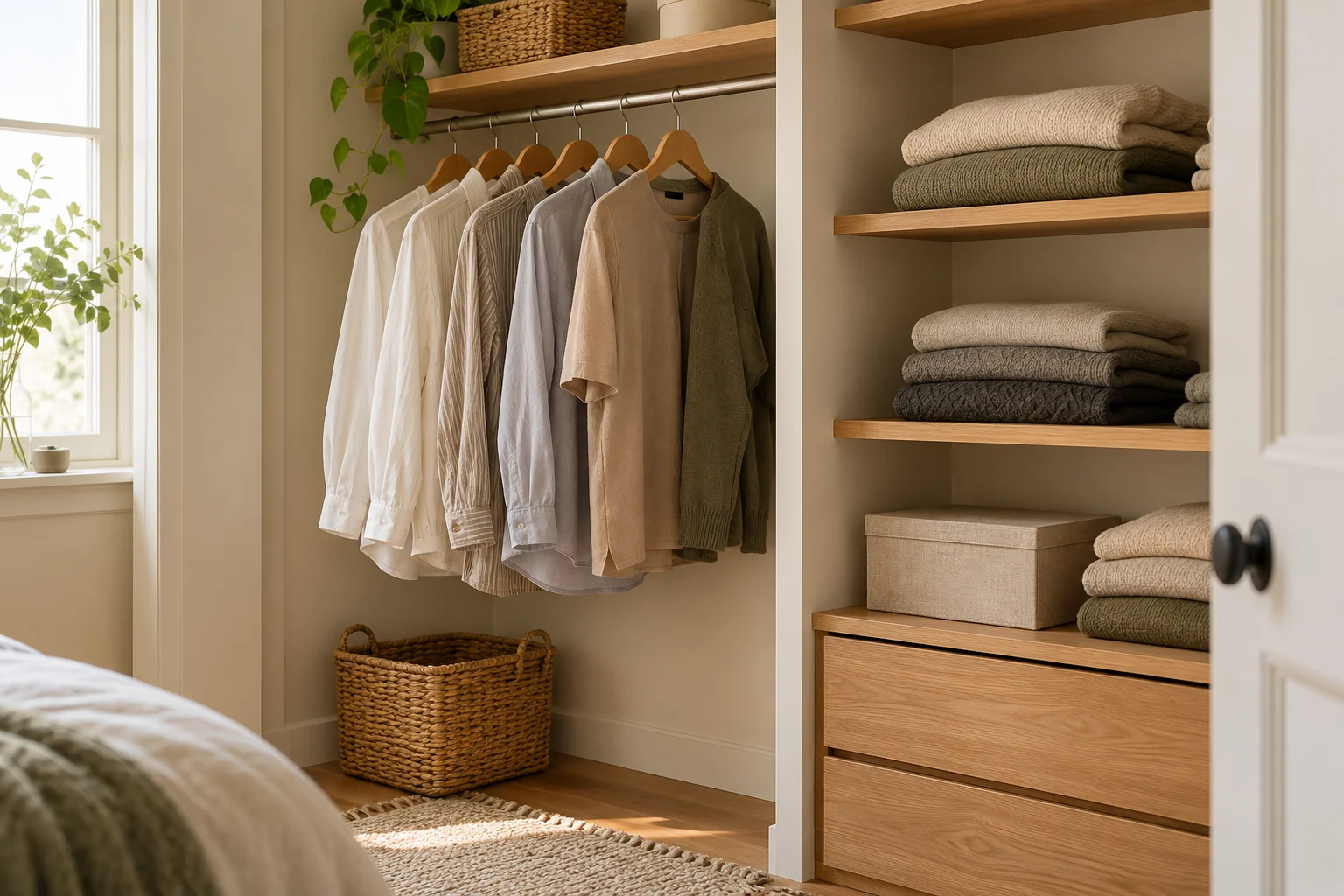
Assign hanging and folded roles
Separate clothes that need hanging from those suited to drawers or shelves. Count the active wardrobe before choosing furniture. A small rack and an existing dresser may serve better than one oversized unit. Measure both the furniture footprint and the space required to stand in front of it.
Create a complete dressing area
Put everyday clothing close to where you dress. Keep shoes, laundry, and accessories in defined adjacent homes so the rack does not become responsible for everything. Use a covering only if it leaves garments accessible and suits the storage furniture. Keep entrances and movement paths clear.
For example, hang jackets and shirts on a modest rack while storing knitwear and underwear in existing drawers. Place a hamper nearby and give shoes their own shallow area. That division keeps the rack from becoming the only destination for every clothing task.
Follow the laundry cycle
Live with the arrangement through laundry day. If clothing keeps landing on a chair, identify whether hanging, folding, or retrieval is the obstacle. Adjust that part of the system instead of adding another miscellaneous basket that simply hides the same unfinished task.
About our editorial approach · Created with AI assistance.