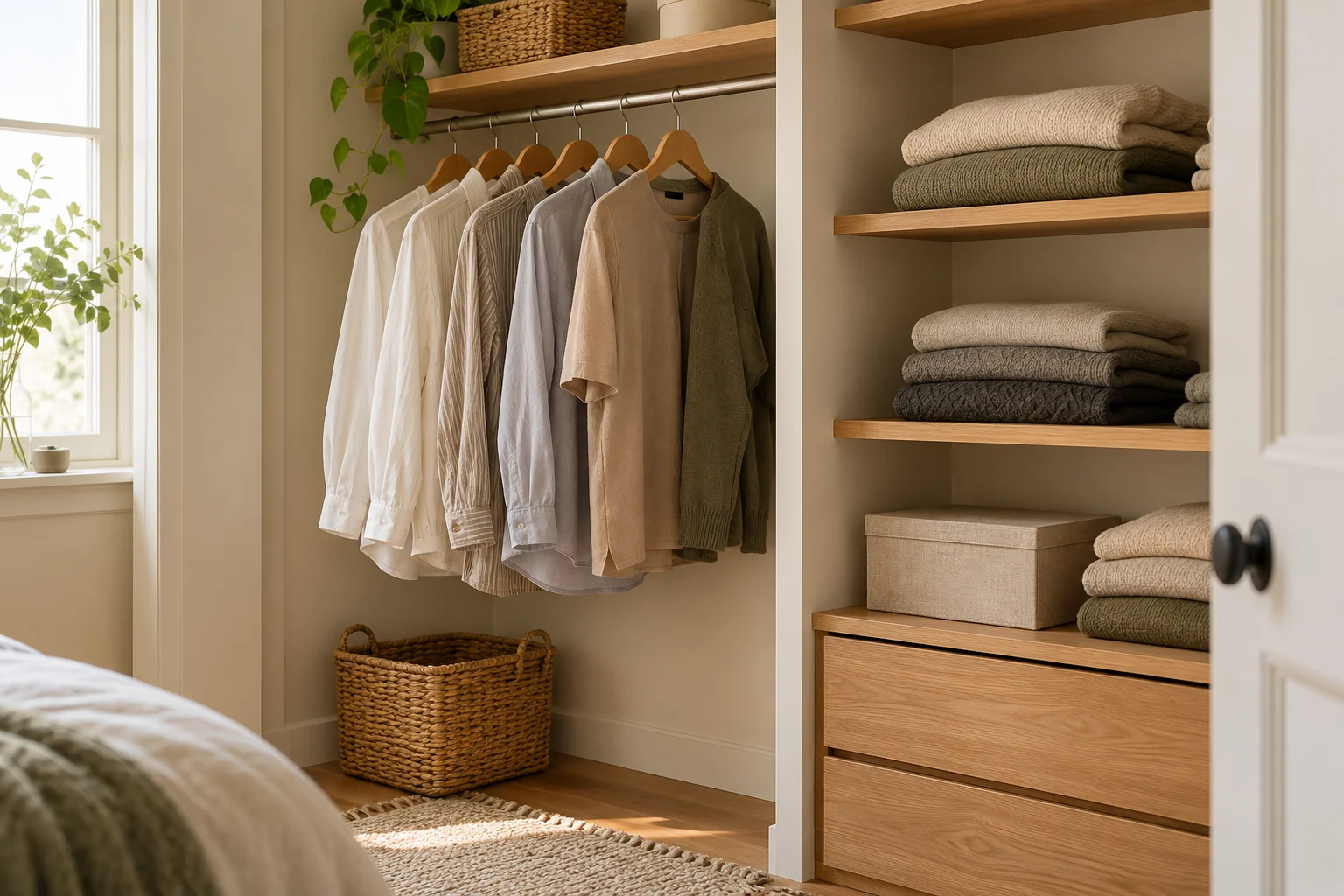
Map existing room capacity
Map the room's usable floor area and note doors, windows, and furniture movements. Look for existing drawers, under-bed space, or a cabinet interior before adding another large unit. Measure the full clothing footprint, including hanging sleeves. Keep entrances and essential movement paths unobstructed.
Give each location a role
Choose a small number of storage locations with clear roles. Fold suitable garments into existing drawers and reserve any available hanging space for pieces that need it. Avoid scattering tiny baskets throughout the room. A portable rack is only useful if its location remains practical when the room is occupied.
A low dresser may supply the folded storage while a small existing rail handles only shirts and jackets. This division can avoid adding a full wardrobe cabinet to a room already short on clear floor area.
Keep clothing off spare surfaces
Try the arrangement during dressing and laundry return. If clothes migrate to chairs, check whether the designated storage is full or simply awkward to reach. Reduce the active categories or relocate occasional clothing rather than filling every remaining patch of floor.
About our editorial approach · Created with AI assistance.