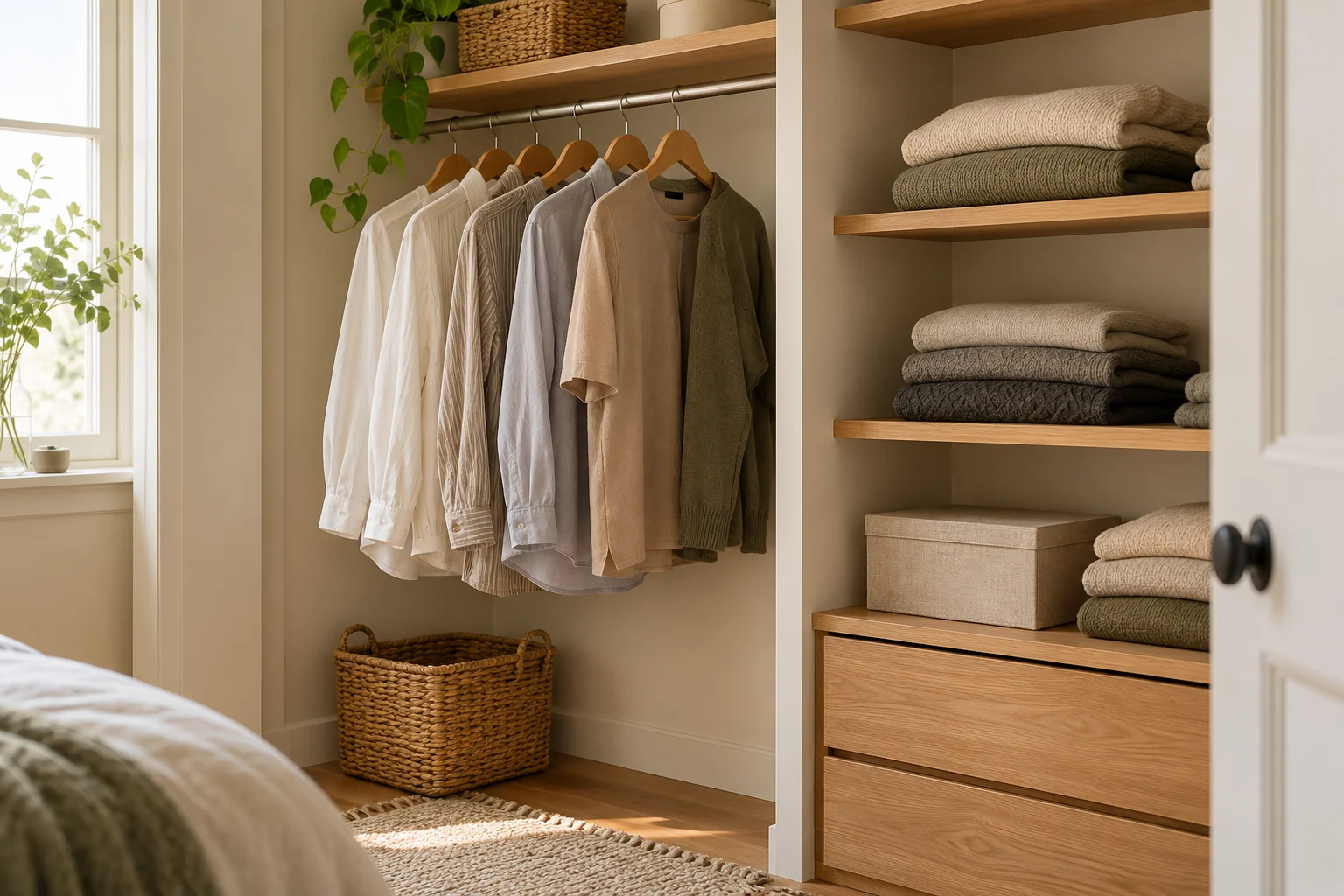
Start with garment measurements
Bring garment measurements and category quantities into the planning process. Identify long dresses, bulky coats, folded stacks, shoes, and laundry needs. Compare the proposed compartments with those objects. Ask what each unusually narrow or deep section is intended to hold and how it will be reached.
Inspect corners and overlaps
Examine corners, door overlaps, and drawer extensions closely. A rendering can hide access conflicts. Request clear dimensions for usable interiors, not only cabinet exteriors. Consider adjustable components where future needs are uncertain. Avoid paying for specialized accessories unless they solve a problem you actually experience.
Ask what happens at the inside corner where two hanging rails meet. If both sections are drawn fully occupied, the clothes may overlap even though the cabinetry looks neatly separated in the rendering.
Walk through the plan
Walk through the proposed dressing and laundry routines on the plan. Where would you stand, place a basket, and return each category? Resolve those actions before approving the arrangement. A small intentional gap can be preferable to an expensive compartment that nobody can use comfortably.
About our editorial approach · Created with AI assistance.