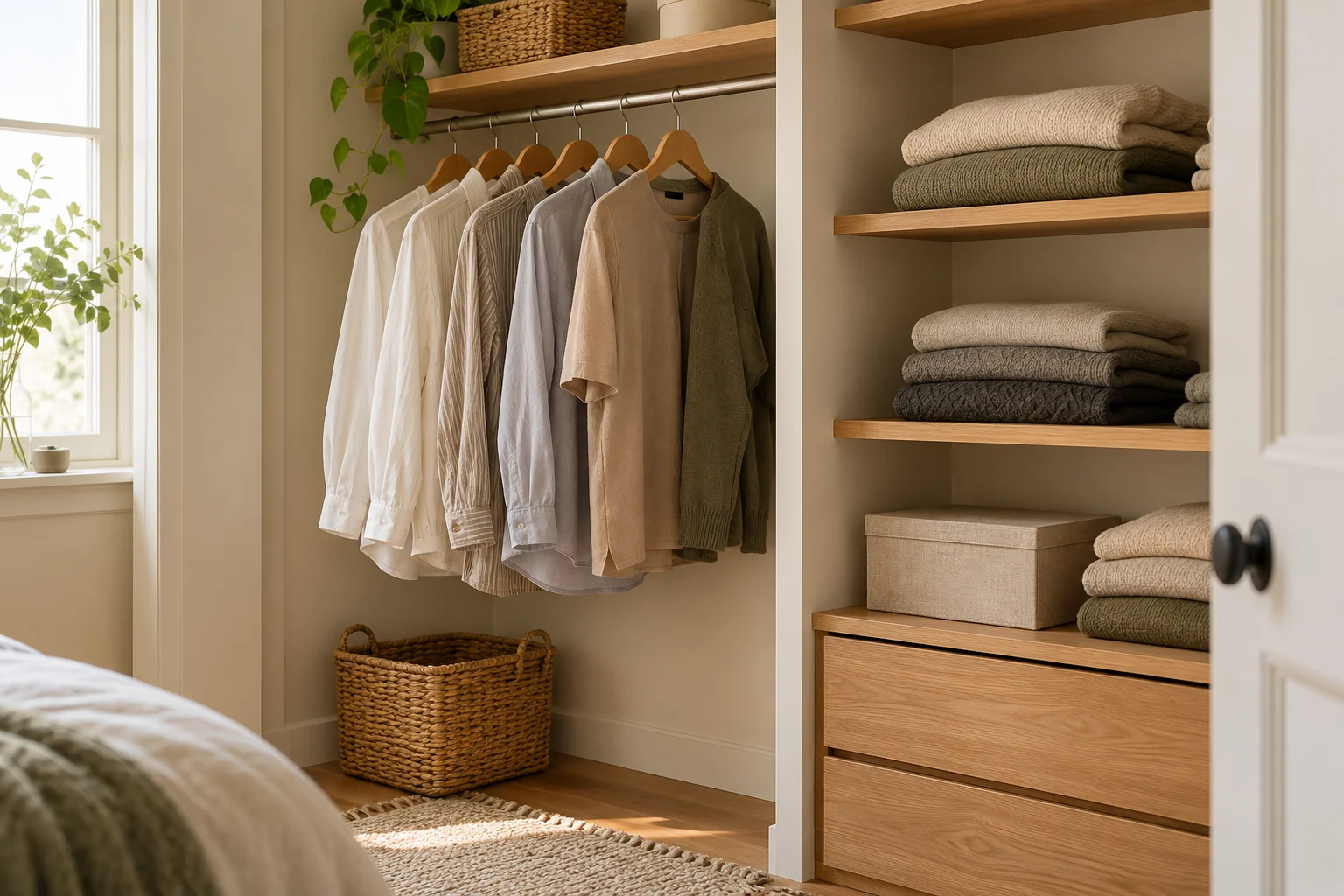
Start with three garments
Take a shirt, a jacket, and a pair of trousers out of your wardrobe. Lay each beside the proposed hanger and check where its weight will rest. A shirt needs shoulders that sit naturally rather than stretching beyond the seams. A shaped jacket may benefit from broader support. Trousers need a suitable bar or clips that do not mark the fabric. Treat heavy knits separately; a shelf may serve them better than any hanging option.
Check everyday handling
Load and remove each piece without pulling its neckline or catching a seam. Look at the hook clearance on your actual rod, not just a product photograph. Then place the loaded hanger between neighboring clothes and check whether you can slide it out comfortably. Keep specialist supports where they solve a real problem. A wardrobe can use several hanger types while staying organized through consistent garment categories and a small reserve of empty hangers.
A practical closet audit
For a wardrobe with button-down shirts, tailored blazers, and heavy sweaters, begin with three separate decisions. Test the shirt on your proposed everyday hanger, retain shaped support for the blazers, and give the sweaters a shelf if their construction calls for it. Count each category only after that trial. This produces a purchase list based on suitable use instead of buying one large pack and trying to make every garment conform to it.
About our editorial approach · Created with AI assistance.