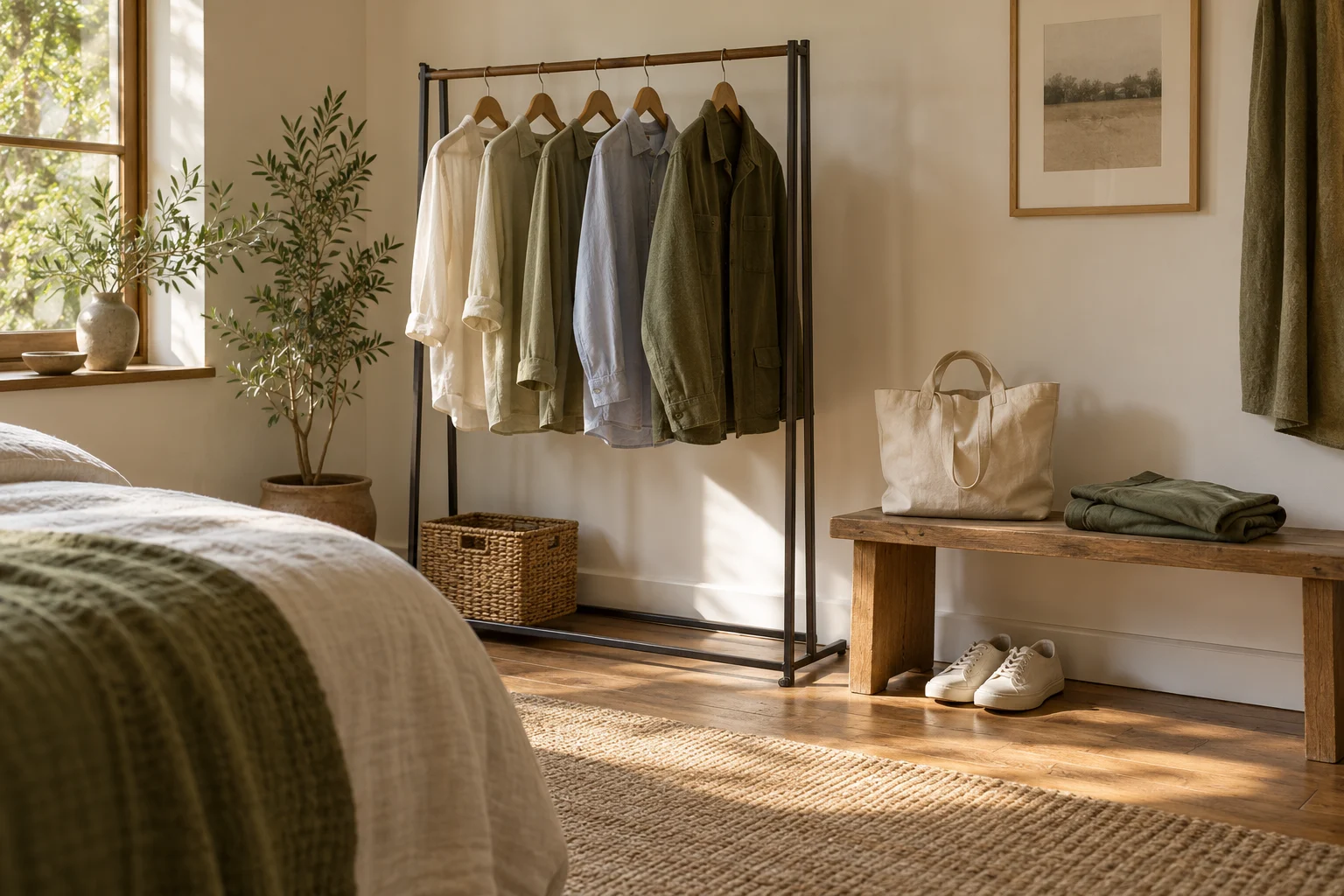
Choose meaningful groups
Start with the distinctions that guide dressing, such as work tops, comfortable layers, or everyday trousers. Avoid a detailed classification that makes sense to an organizer but not to the user. Keep category boundaries visible with spacing, a divider, or a label where helpful. Use a consistent location so each category becomes familiar through ordinary use.
Test the cues
Try clear words, pictures, contrast, or tactile cues according to individual preferences and needs. Do not rely on color alone if another cue would improve recognition. Place labels where they can be seen or found during both retrieval and put-away. Ask the user to locate a few familiar items and return them without prompting, then adjust what causes confusion. Keep the labels accurate when clothing moves. Recognition is not improved by adding more signs everywhere; a small number of useful cues paired with uncluttered, reachable storage usually creates a more understandable routine.
About our editorial approach · Created with AI assistance.