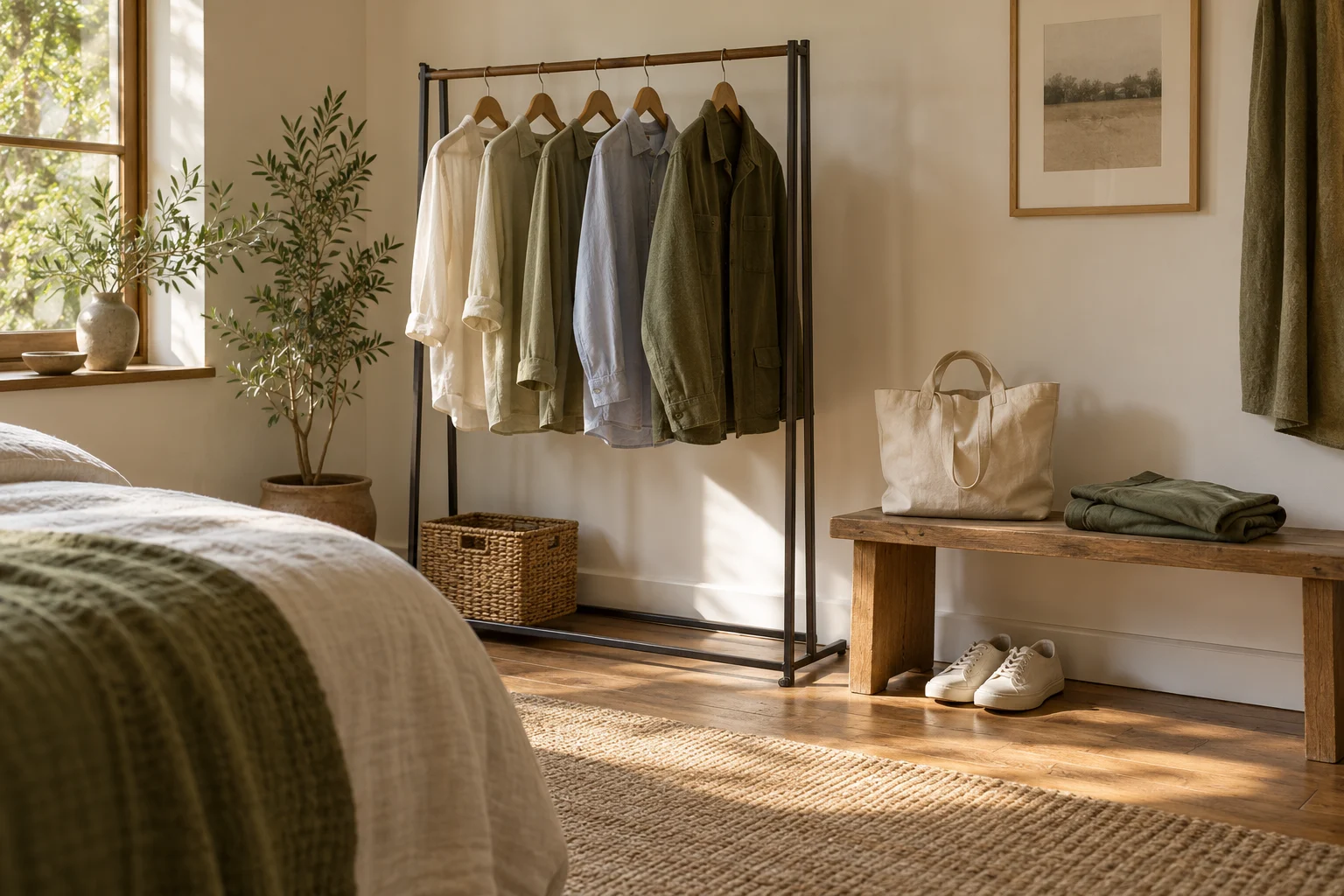
Identify specific irritations
Notice whether glare makes labels difficult, rattling hangers are distracting, open shelves feel overwhelming, or certain surfaces are unpleasant to touch. Ask which features help as well as which are uncomfortable. Preferences vary, so do not assume that muted colors, enclosed storage, or bright lighting are automatically the right answer. Change one factor at a time where practical so its effect is easier to assess.
Build a predictable routine
Keep comfortable clothing categories recognizable and put frequently used items in consistent locations. Choose storage closures and supports that the user finds manageable. Reduce unrelated objects around the dressing area if they interfere with focus or comfort. Keep a flexible place for clothing that needs reassessment rather than forcing it back into the active selection. Trial the setup during ordinary dressing, including different times of day when light changes. The goal is a more comfortable environment chosen with the user, not a claim that one closet design addresses every sensory need.
About our editorial approach · Created with AI assistance.