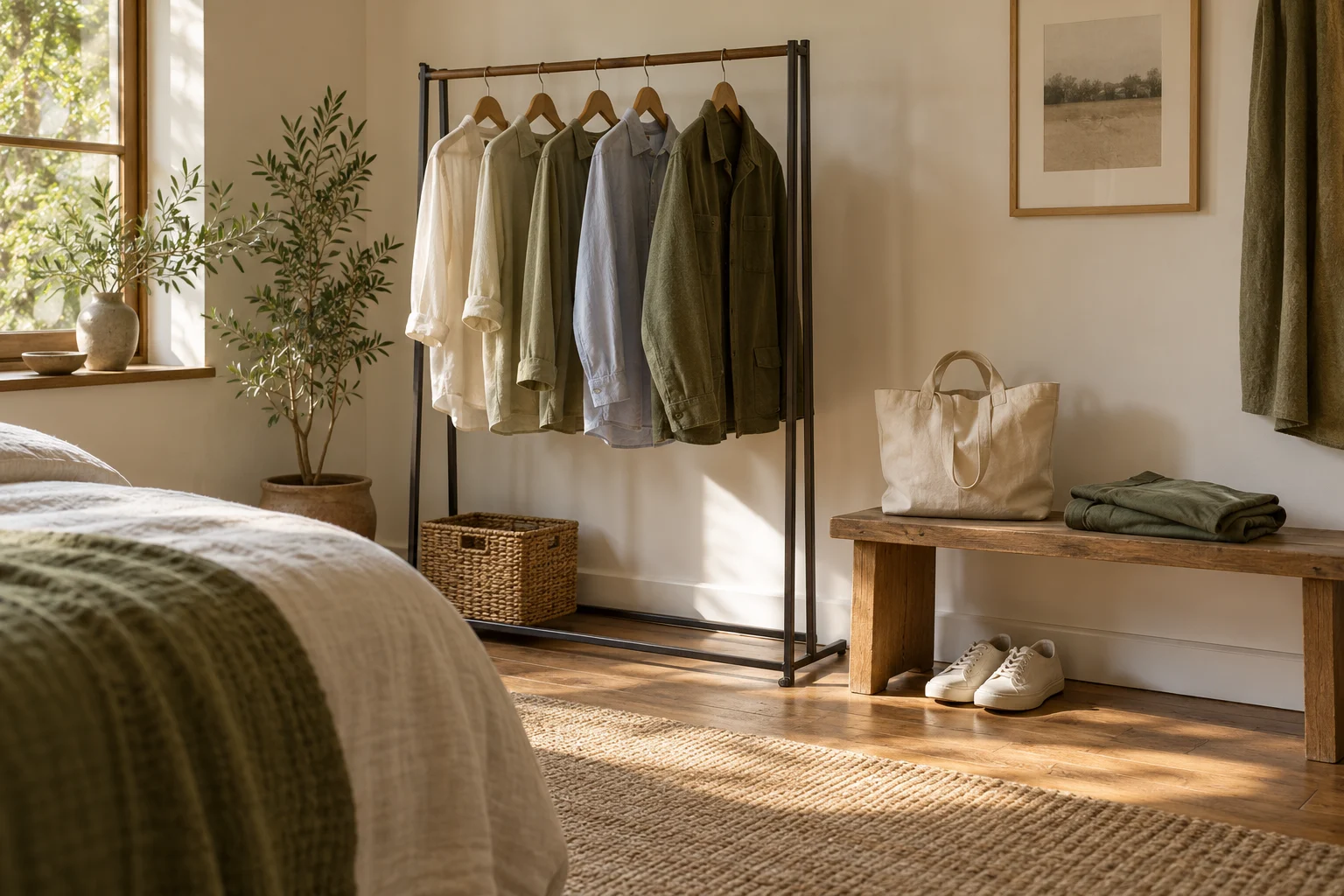
Identify meaningful differences
Separate pieces by useful features, such as the location of openings, closure type, or intended seated fit, only when those distinctions help selection. Do not assume every adaptive garment is operated the same way. Keep maker instructions for unfamiliar closures and care needs accessible. Ask the wearer which pieces are easiest to identify and use instead of deciding solely from product descriptions.
Store for the chosen routine
Place frequent items in a suitable reachable zone and arrange them so their relevant features are visible. Keep closures from catching neighboring fabrics, following garment guidance for fastening before storage or washing. Avoid folding that hides an important opening or makes the garment difficult to orient if another arrangement works better. If assistance is involved, agree on where garments belong and how preferences should be recorded privately. Test retrieval, dressing preparation, and put-away together. Organization should preserve the wearer’s choices rather than reducing a varied wardrobe to one broad adaptive-clothing bin.
About our editorial approach · Created with AI assistance.