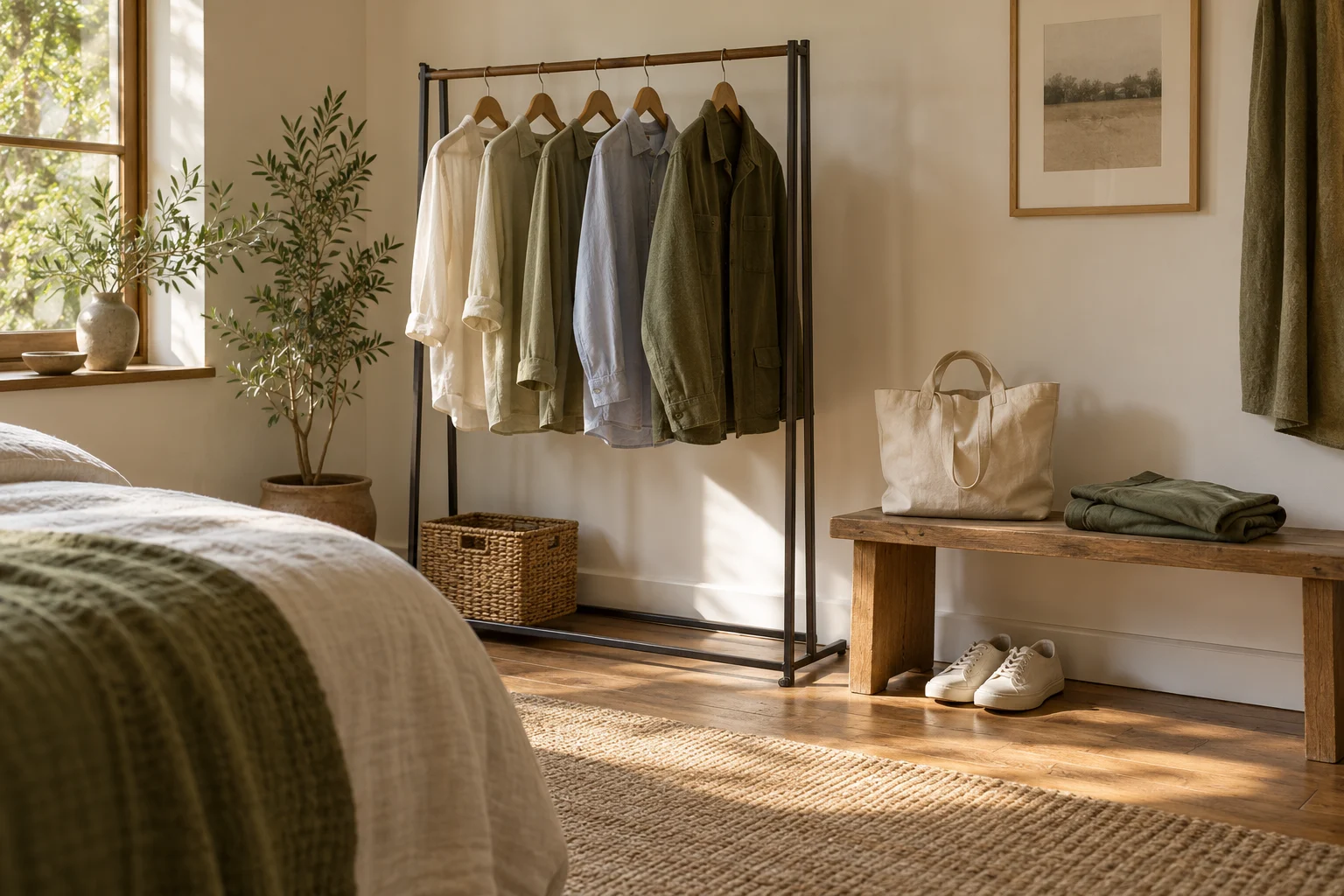
Build around the working week
Lay out the trousers, skirts, shirts, and layers you actually wear to work. Separate pieces that need special cleaning from those that move through your normal laundry. Put your most useful bottoms together, then place compatible tops nearby. You do not need to store fixed outfits permanently; keeping the building blocks visible leaves room for different combinations and changing weather.
Give unfinished clothes a destination
Use one small place for a shirt awaiting ironing or a jacket needing a button. These pieces should not look ready when they are not. Before the next workweek, choose a few combinations and check shoes and underlayers too. Move clean clothes back into their category after laundry, leaving space to remove one item without pulling its neighbors off their hangers. Adjust the mix after a week of actual use.
Try a three-outfit check
Choose one pair of work trousers and see whether three clean tops create combinations you would actually wear. Then check the layer and shoes for each. This is an example, not a prescribed wardrobe count: the point is to discover whether the visible clothes form useful outfits. If the same top is the only workable option, note the gap. If several combinations already work, place those pieces together by category and avoid adding more clothes before using the options you own.
About our editorial approach · Created with AI assistance.