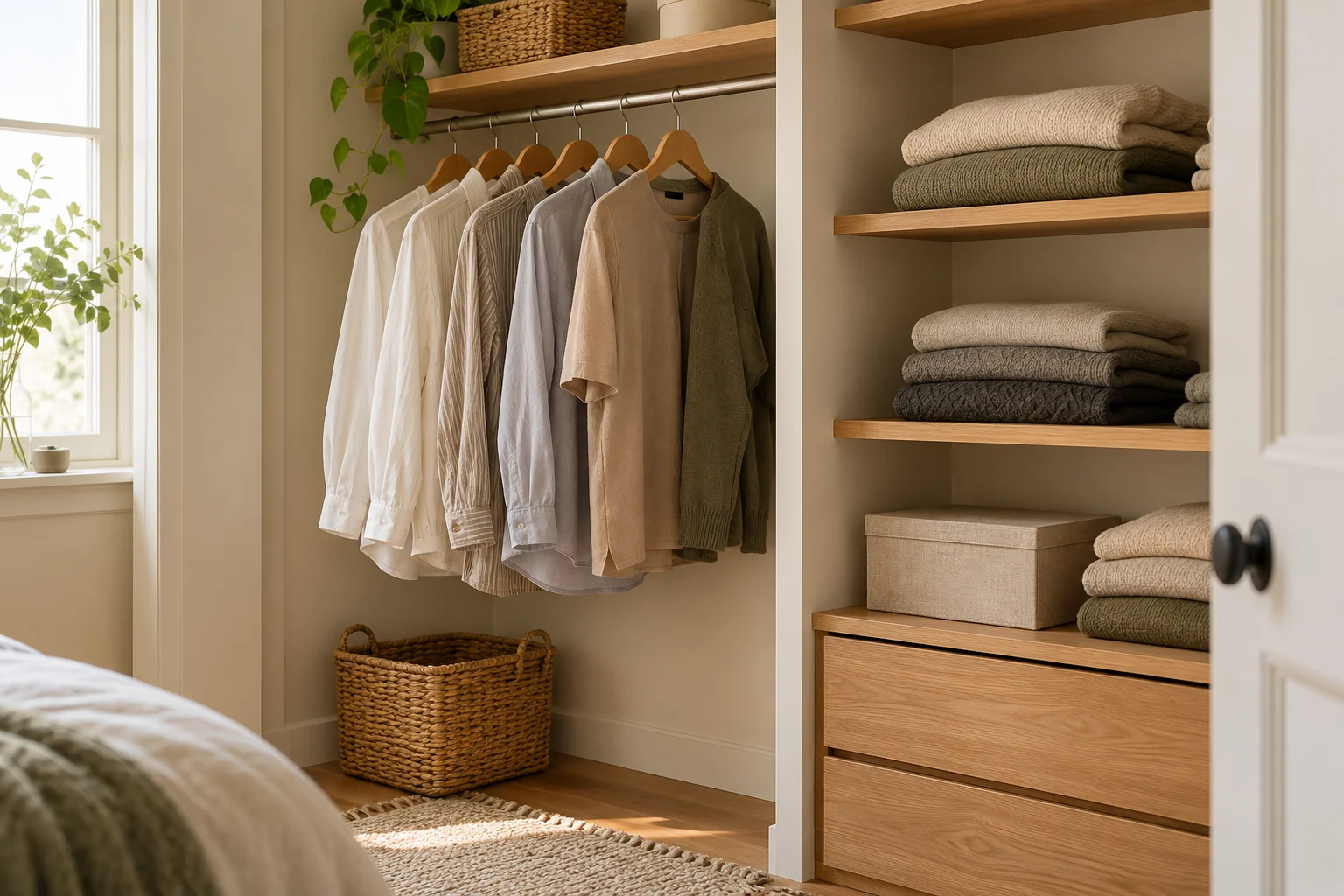
Give color a structure
Keep garment types together, then arrange colors within those groups if you enjoy that view. Use a consistent rail direction and a few clear category boundaries. Leave space around bulky pieces so their outlines remain readable. Avoid hiding favorite clothes solely because they do not match a decorative palette; the closet exists to support the wardrobe you actually wear.
Reduce competing details
Choose simple labels and keep empty packaging or unrelated objects elsewhere. Containers can coordinate through size or alignment without sharing one color. Put frequently used pieces where they are easy to return, even if that breaks a perfectly symmetrical display. Stand back after an ordinary week and identify the one area that looks confusing. Adjust its layout or category rather than removing all personality from the space. A calm result should remain useful on a busy morning, not only after a styling session.
Keep a visible personal element
If you enjoy bold prints, place them in one readable section instead of treating them as visual clutter. If accessories are important to how you dress, choose a small accessible display rather than burying them in opaque boxes. Then simplify the surrounding storage so the favorite items remain easy to see. This approach lets the wardrobe reflect your taste while retaining clear boundaries. Reassess after ordinary use: a personal display is working when it helps you select clothes, not when maintaining it requires concealing the rest of your wardrobe.
About our editorial approach · Created with AI assistance.