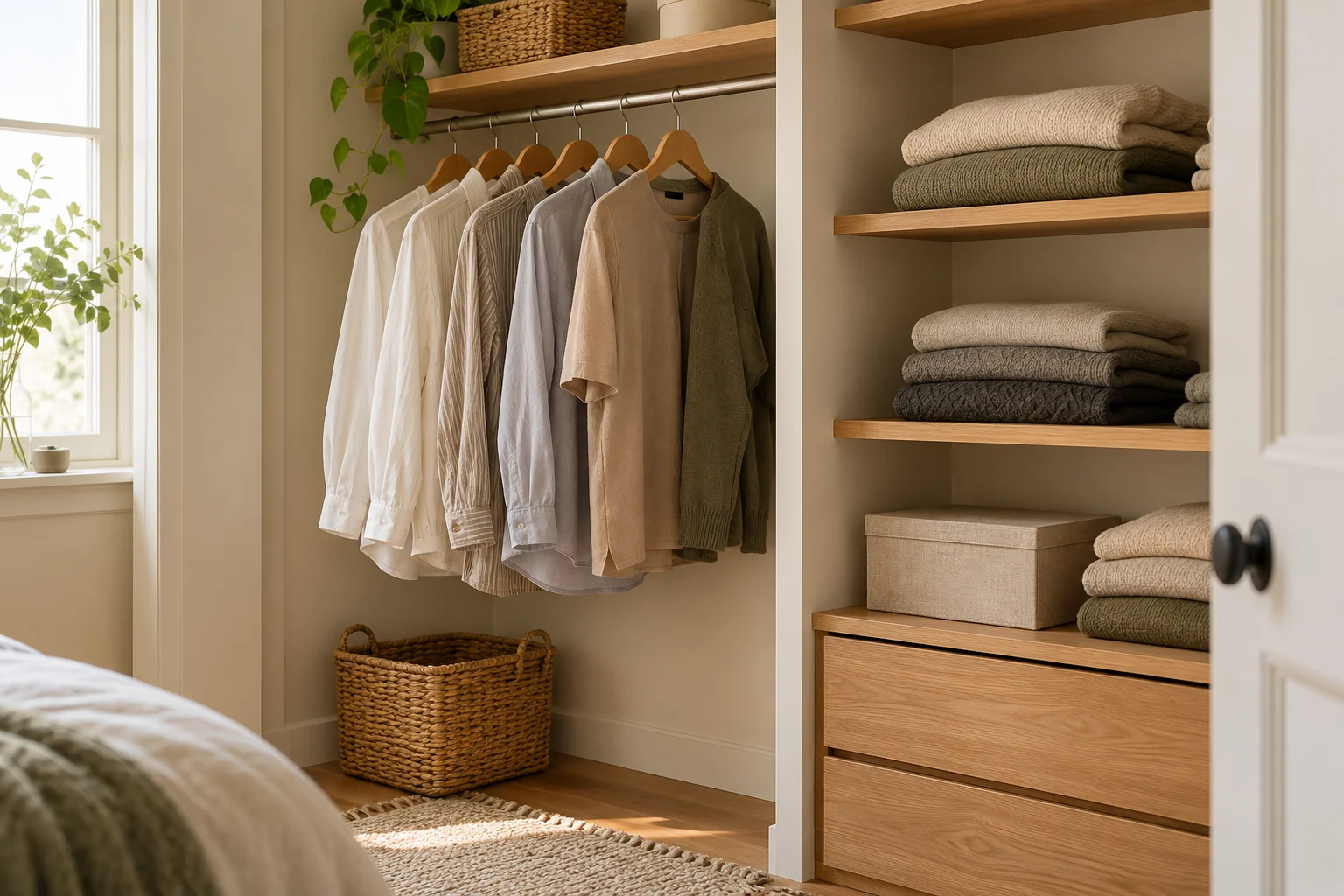
Work on one useful section
Choose a rail or shelf that affects daily dressing. Separate clothes by type and identify items awaiting laundry, repair, or a decision. Return only ready pieces to the active section. Reuse a clean, sound box for small accessories if its surfaces and size are suitable. Keep specialized hangers where garments need them instead of trying to make every support look alike.
Test before shopping
Place frequent-use items at easy reach and occasional contents farther back. Leave enough room to remove and return garments. Use a simple paper label if a category is unclear. After several laundry cycles, note what still causes friction. You may find that a shorter pile or different shelf position solves the issue. If a genuine storage gap remains, you can describe it precisely later. Finishing without buying anything is useful only if the resulting arrangement remains easy to use.
Use a one-shelf example
Suppose a shelf contains sweaters, spare bags, and loose belts. Move bags to their existing appropriate home, place belts in a suitable small container, and leave the sweaters in short reachable piles. Nothing new is required, but the categories are easier to recognize. If a remaining pile still hides most garments, split it across available space or review the contents rather than adding another stack on top. The useful outcome is a shelf you can use tomorrow without repeating the entire sorting process.
About our editorial approach · Created with AI assistance.