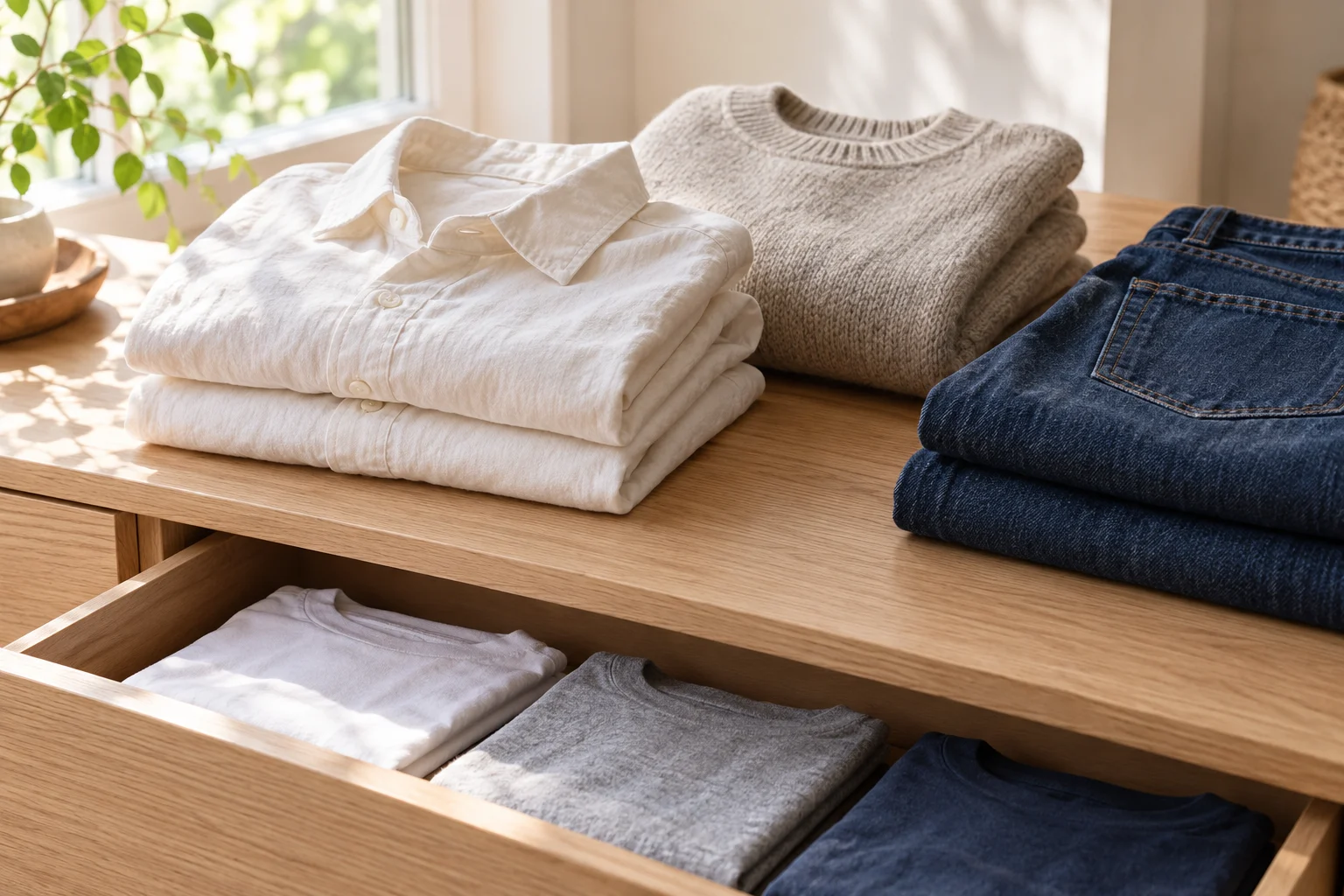
Choose a bounded working set
Keep a practical number of garments suited to your projects and the frequency of use. Separate them from clean everyday clothing and label the section clearly. Follow product, workplace, and garment guidance for any materials involved. Clothing exposed to hazardous substances may require a special process; do not assume it belongs in household laundry or ordinary closet storage.
Review condition and usefulness
Keep only pieces you actually choose for the activity. Check fit, closures, and freedom of movement, and retire items that are no longer suitable. Store clean, dry working clothes in a simple accessible place, with required protective equipment handled according to its own instructions. When another everyday shirt becomes worn, do not automatically add it to the reserve. Decide whether it replaces something useful. A small working rotation is easier to maintain than a growing pile justified by the possibility of a future painting project.
About our editorial approach · Created with AI assistance.