Look at the relevant features
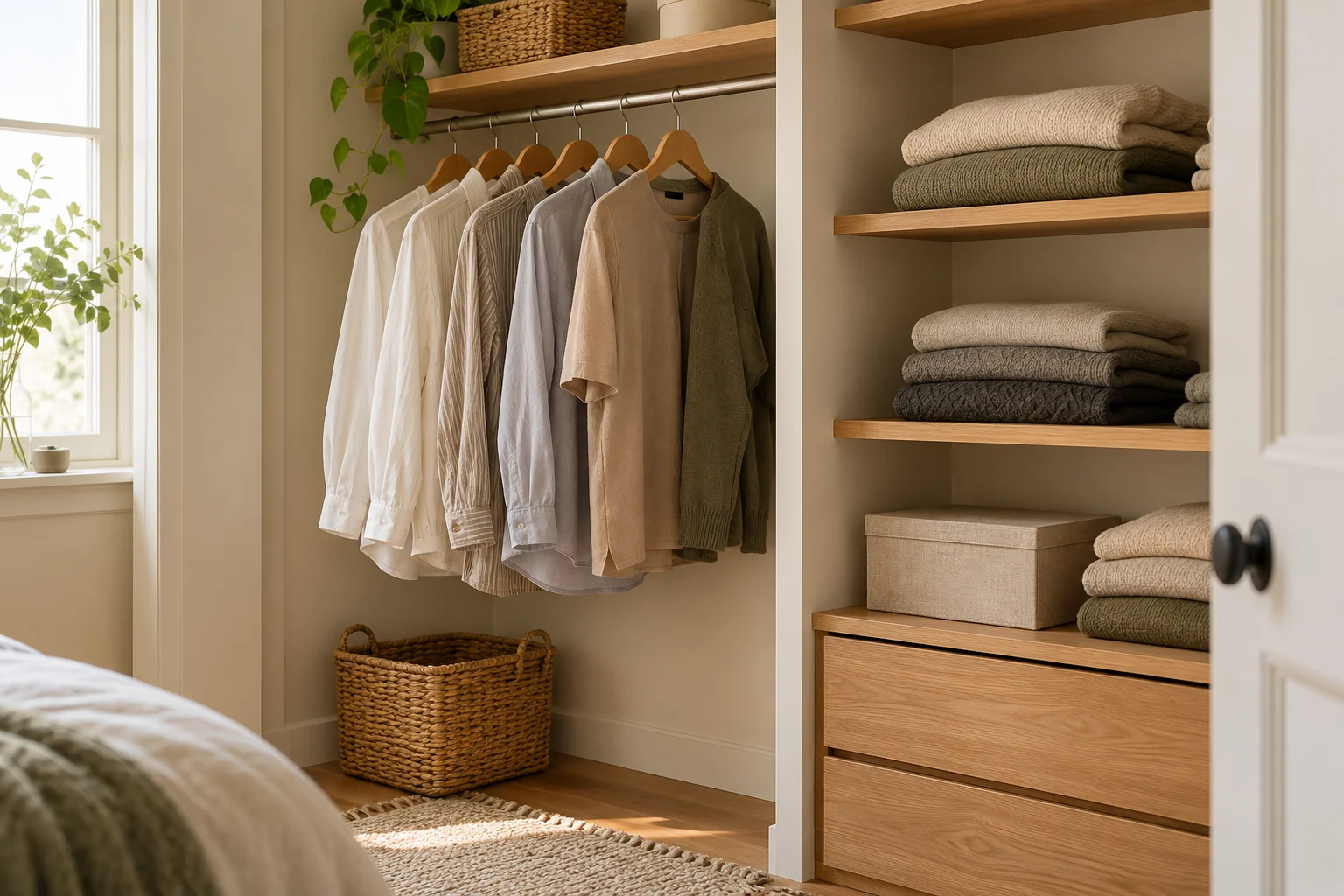
Garment care depends on suitable support, size, surface condition, and handling. A smooth hanger that fits a shirt may help avoid awkward stretching, while a structured jacket may need shaped support. Two hangers with identical colors can perform very differently. Replacing a suitable specialty hanger solely to match a set can make the storage less appropriate for that garment.
Evaluate the actual change
Check whether clothes sit naturally, remain easy to remove, and avoid rubbing against rough surfaces. Inspect for damage or distortion during ordinary use. Do not convert a tidier rail into an unsupported lifespan claim; measuring garment longevity would require a relevant comparison over time with care and wear conditions considered. Keep sound existing hangers where they work. If a matching set helps you maintain clear categories and return clothes promptly, that is a practical benefit worth describing honestly without promising a particular number of extra years for the wardrobe.
Ask what evidence would be needed
To claim longer garment life, a comparison would need a clear definition of damage or failure and account for fabric, garment construction, wearing, washing, and handling. Matching appearance is not such evidence. For an ordinary closet decision, you can still observe whether an item sits correctly and comes off easily. Report that limited benefit in plain language. This distinction lets you choose a hanger set for genuine convenience or aesthetics without turning a personal preference into an unsupported promise about how long every shirt or jacket will last.
About our editorial approach · Created with AI assistance.