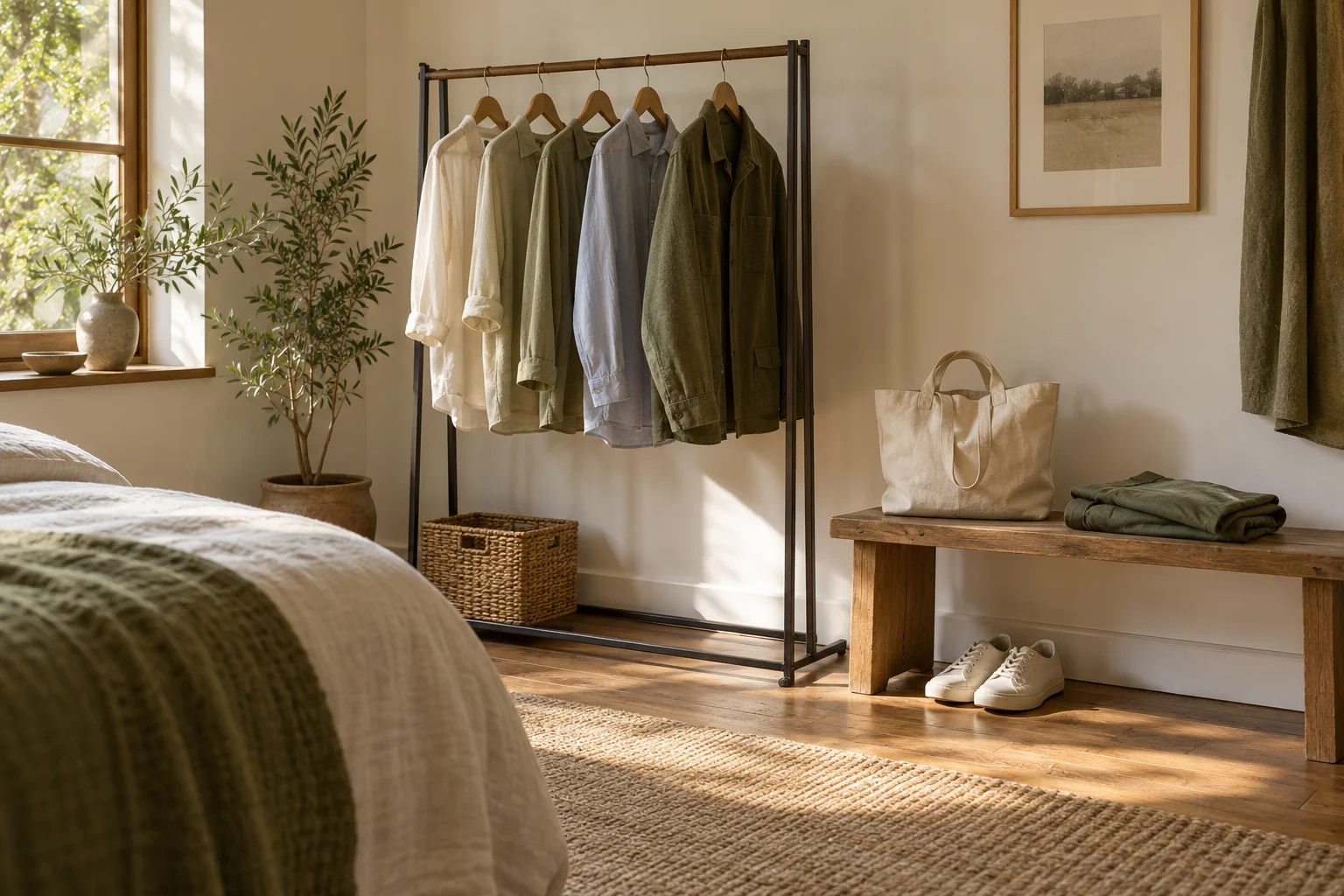
Choose a normal week
A closet can look convincing immediately after a reset and become awkward as soon as clean clothing comes back. Test the layout during a week that resembles your usual routine. Keep a simple note of when you wash, where clothes finish drying, and which items wait longest to be put away. There is no need to count every sock. The useful information is where a task stops.
Avoid buying new organizers during the trial. Move one shelf category or change one drawer at a time so you can tell what affected the result.
Follow the return journey
Carry one ordinary load from the laundry area to its destination. Notice whether you must clear a surface, move another person's clothes, unfold an entire stack, or search for an empty hanger. Each extra movement identifies a possible change. A basket that fits beautifully but requires removing three other baskets may be a poor choice for daily clothing.
Try returning clothes while the storage is nearly full, not only when half your wardrobe is in the wash. Capacity should include clean clothing that is temporarily elsewhere.
Keep the changes that reduce work
At the end of the week, choose the two interruptions that occurred most often. Move frequently washed basics closer to the put-away route, lower a stack, or leave a small supply of appropriate hangers in one place. Repeat the same laundry journey after the change.
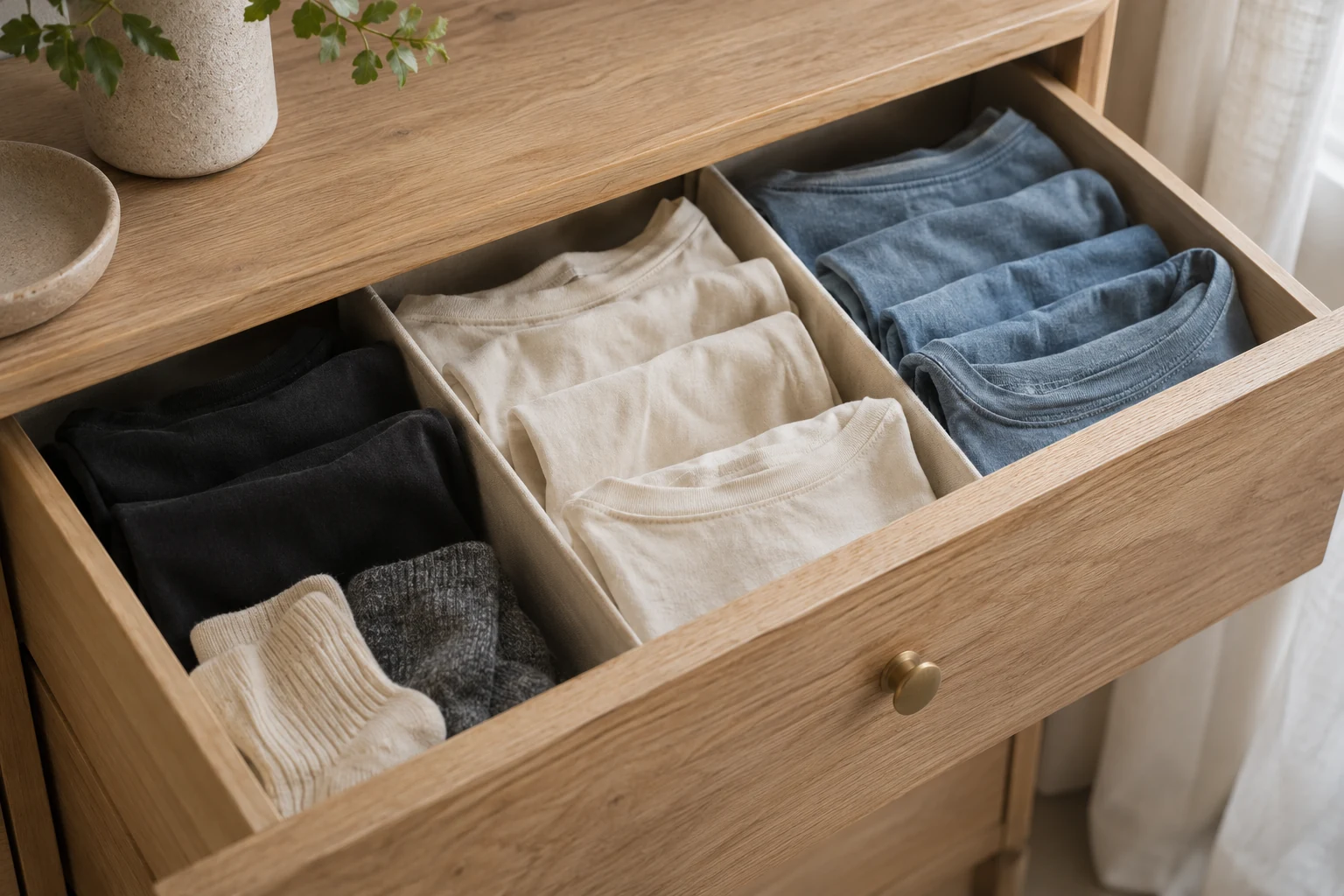
Judge success by whether clothing reaches its home without a second sorting session. A less symmetrical drawer that you use comfortably is a useful result. Photograph the working arrangement for reference, then stop adjusting it until another real problem appears.
About our editorial approach · Created with AI assistance.