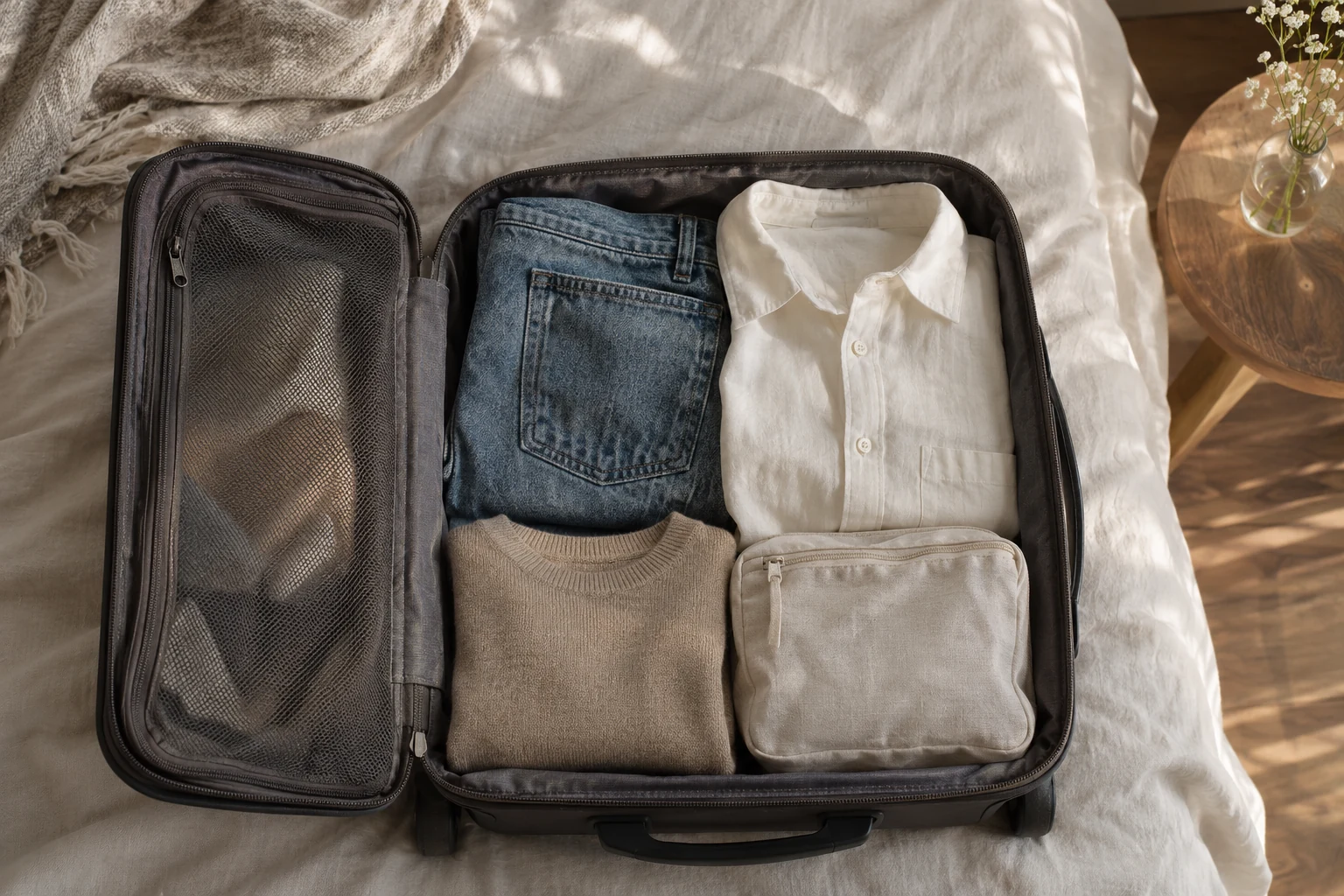
List the fixed commitments
A trip that includes both ordinary days and a formal event is easier to plan when you start with the non-negotiable requirements. Write down the event, the expected clothing, and any specific shoes or accessories. Confirm uncertain dress-code details with the host or organizer instead of guessing from a label such as smart casual.
Build each required outfit completely on a clean surface. Include the small pieces that are easy to forget, but do not turn this into a reason to bring several backup versions of everything.
Find overlap without forcing it
Next, choose everyday clothing that works with parts of the required outfits when that is genuinely comfortable. A shirt or pair of shoes may serve two occasions, but only if the schedule, weather, and cleaning access make that realistic. Keep any item that must remain presentable for the event separate from clothing likely to get dirty beforehand.
Check how the garments should be folded, supported, or protected during travel. Follow their labels and manufacturer advice rather than assume a packing method works equally well for tailoring, knitwear, and embellished clothing.
Plan the unpacking order
Place the outfit needed first where you can reach it without dismantling the entire bag. When you arrive, inspect the event clothing and store it appropriately before focusing on less time-sensitive items. Leave yourself a practical way to separate worn clothes on the return journey.
After the trip, note which extra pieces were unused and which shared items created inconvenience. Use that information on the next similar trip. The goal is a reliable packing list that supports the actual itinerary, not the smallest possible suitcase or a wardrobe that depends on every garment doing several jobs.
About our editorial approach · Created with AI assistance.