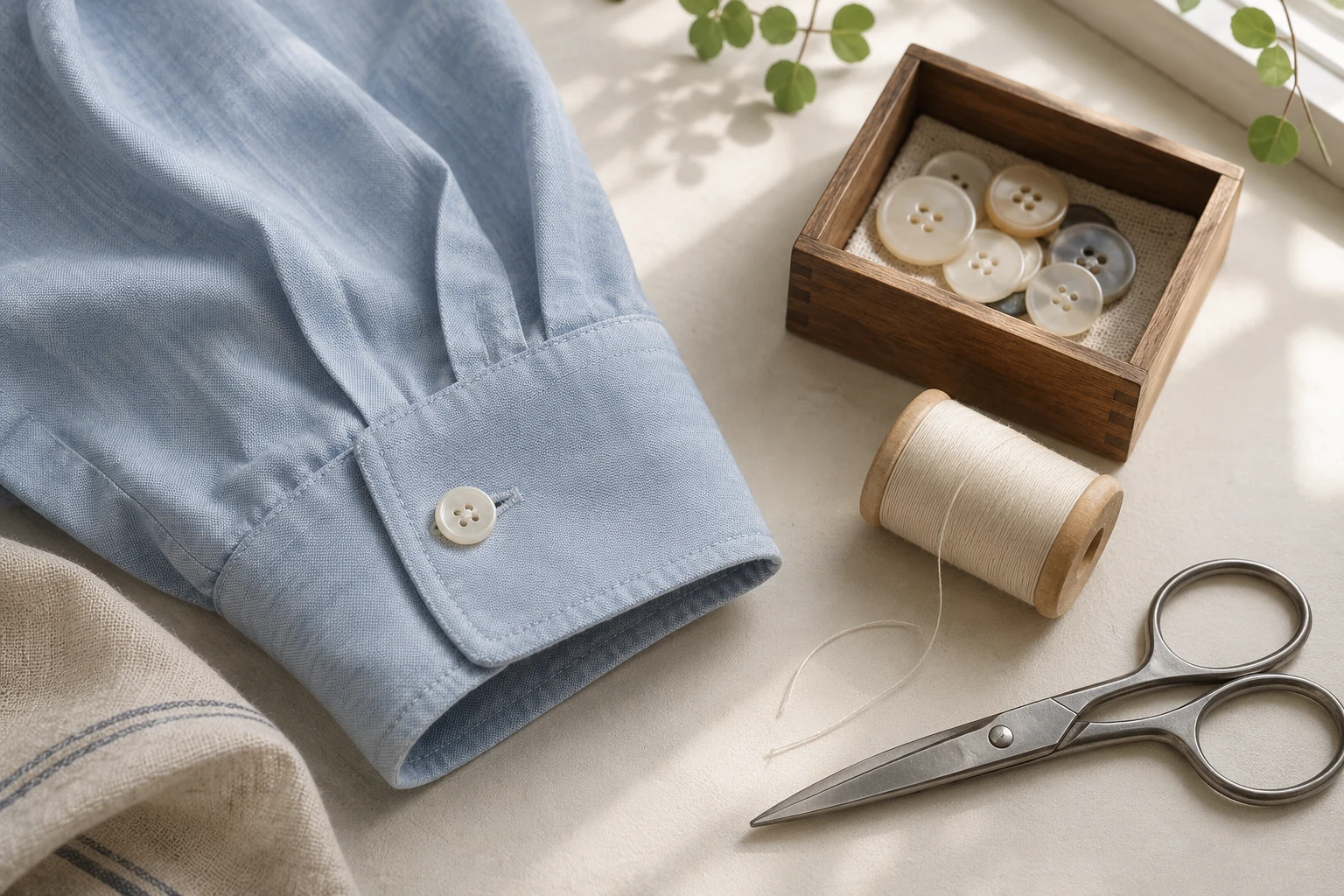
Make the connection before it is lost
A spare button is useful only if you can identify the garment it belongs to. When a new piece includes replacement parts, put them in a small labeled envelope or compartment. Record the garment type, color, brand if helpful, and a short description such as navy shirt with small matte buttons. A photograph of the garment can resolve confusion between similar pieces later.
Do not assume that a button's color alone will identify it. Diameter, thickness, attachment style, and finish can distinguish otherwise similar parts.
Keep parts separate from clothing
Store small fasteners in a defined repair-kit location rather than loose in a pocket or attached to a garment with a pin. Keep sharp tools secured and away from children. For items with several removable components, use a larger labeled pouch and list what it contains. The storage should make missing parts visible without requiring you to empty every envelope.
Include any manufacturer information you may need to request a replacement. Avoid recording unnecessary purchase or payment details when a style name or reference is enough.
Review the record when the garment leaves
When you donate, sell, or pass on a garment, decide whether its spare parts should travel with it. Put them in suitable packaging and describe them honestly. If the garment is no longer usable, reusable fasteners can join a general repair supply only after you have removed the old association.
Keep the system small enough to maintain. A labeled envelope in one box may work better than a detailed spreadsheet. The test is whether you can find the correct part quickly when a repair is needed, not whether every compartment looks identical or every purchase has a permanent archive.
About our editorial approach · Created with AI assistance.