Identify the points of friction
Different start times can turn an otherwise adequate closet into a source of disruption. Notice what creates the problem: opening several drawers, searching for matching items, moving another person's clothes, or needing a light that fills the bedroom. Discuss the routine together before changing the layout. The earlier person's convenience and the later person's rest both matter.
Choose a few changes that are easy to test. There is no need to divide the whole room or replace furniture before understanding the actual interruption.
Prepare a complete small group
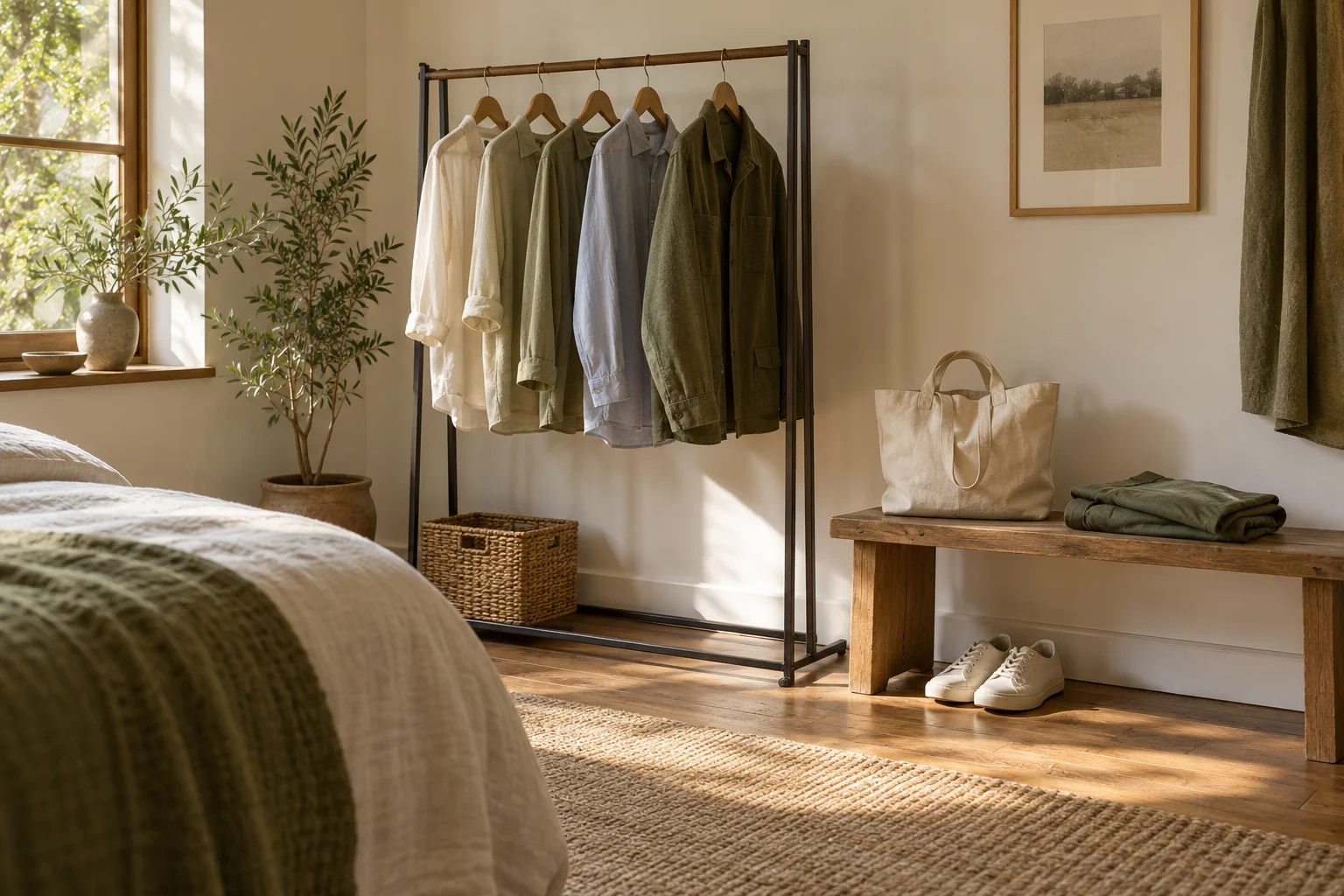
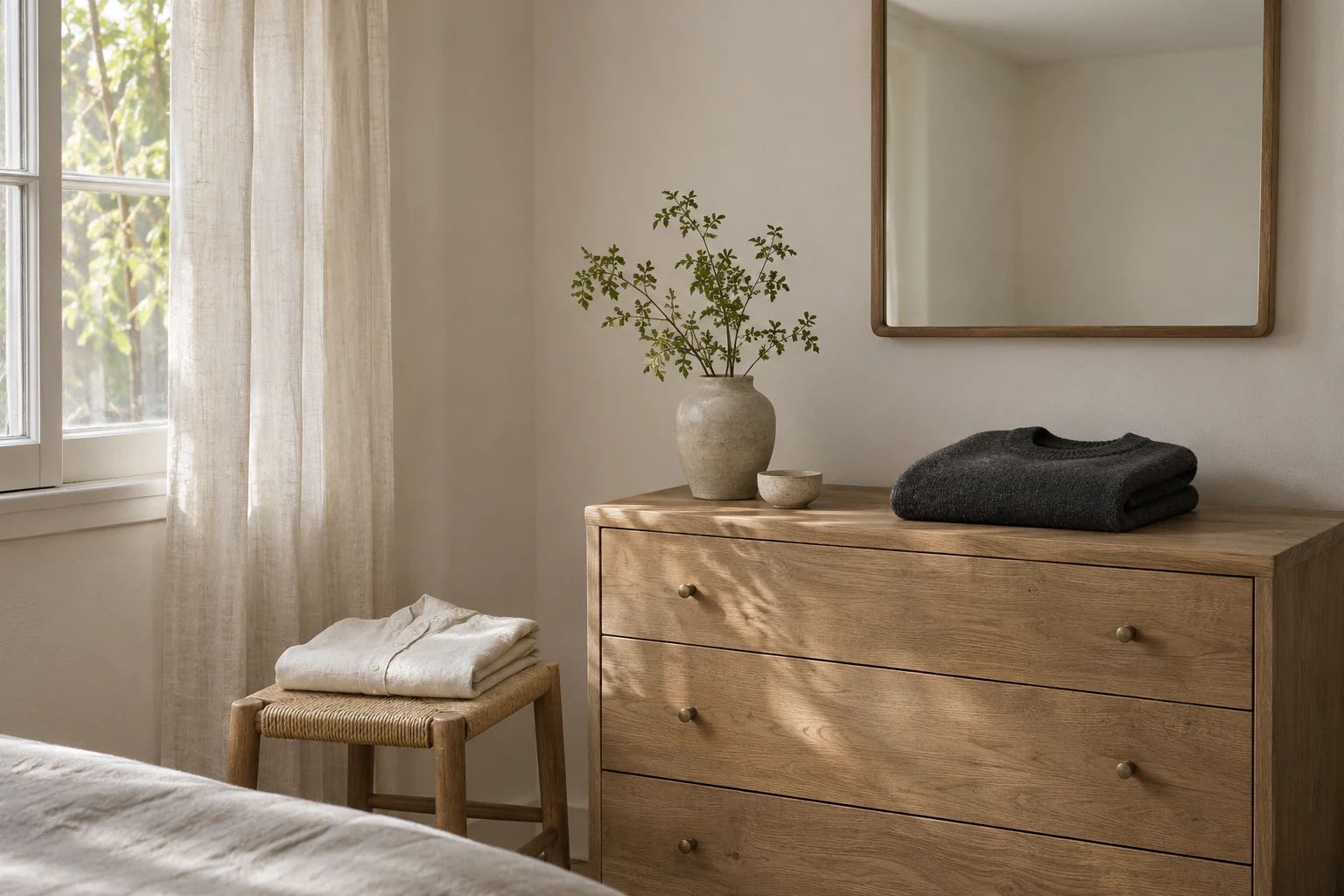
Set out the next outfit in a suitable staging location, including the small items usually found at the last minute. Use proper support for the clothing rather than leaving it compressed in a pile. Keep the group outside the most disruptive part of the shared storage if the room allows it.
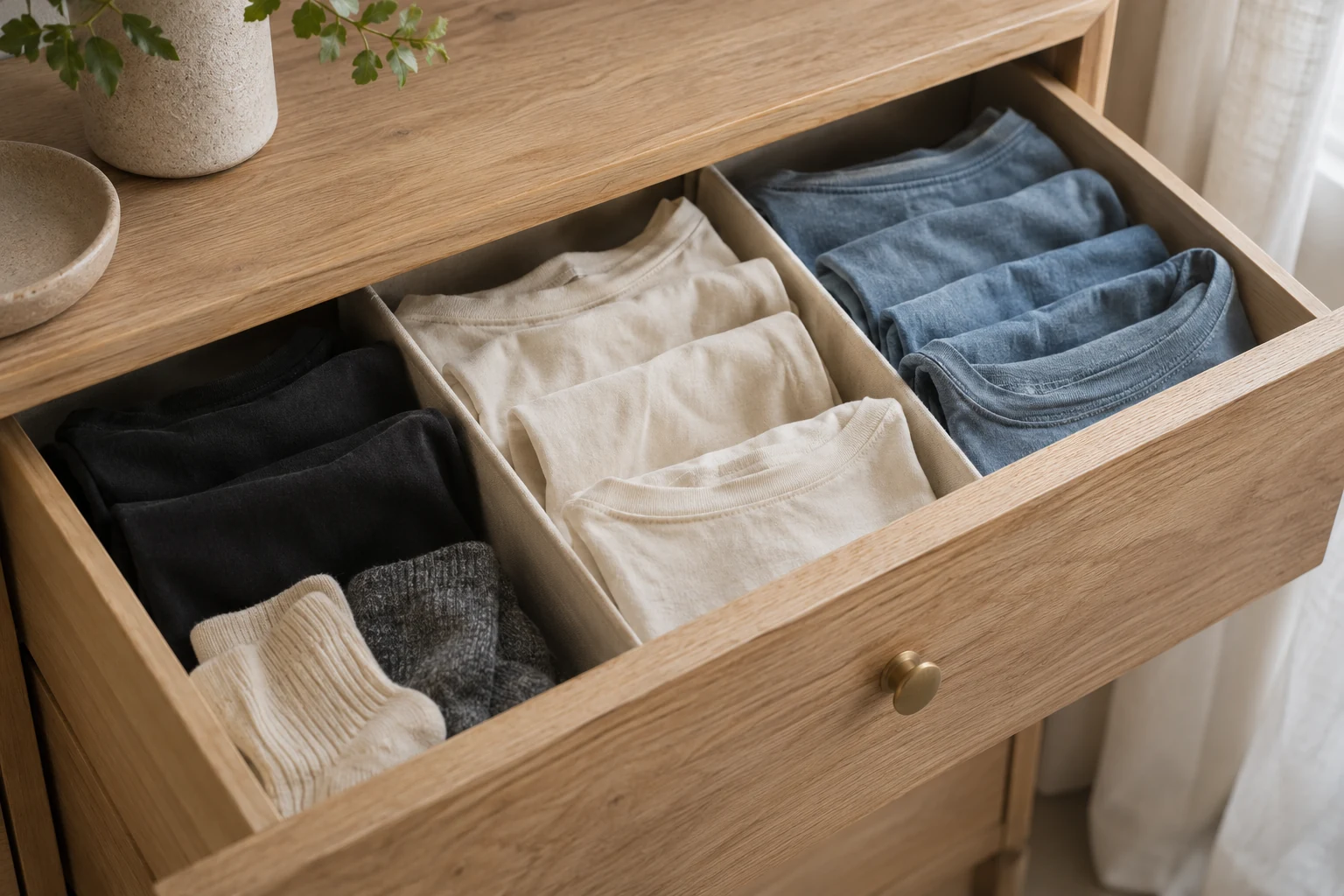
Give frequently used basics clear homes so that either person can retrieve their own items without moving the other's. Lighting changes should follow the fixture's instructions and any building requirements; a portable solution may be enough for a trial.
Keep the staging area temporary
After dressing, clear the space so it is ready for the next use. If yesterday's clothing remains there, define a separate route for laundry or pieces to be worn again. Otherwise the staging area gradually becomes another shared pile that requires negotiation.
Review the arrangement after several workdays, including a day when plans change. The best result is fewer searches and fewer disturbances, not perfect symmetry between two routines. Keep the parts that work for both people and let each person organize their own clothing within the agreed boundaries.
About our editorial approach · Created with AI assistance.