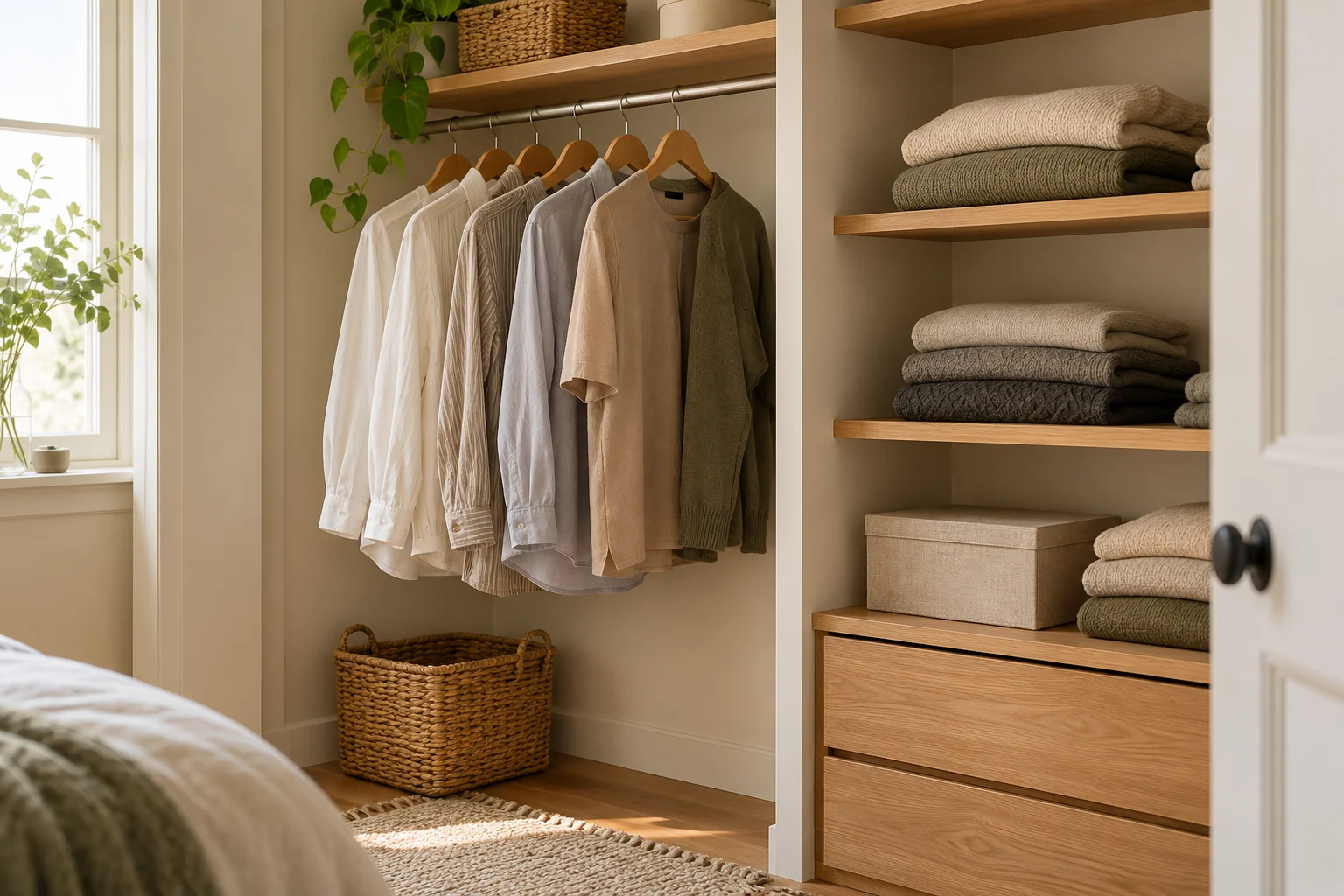
Record a representative group
Choose a representative group of garments and count them. Arrange them as you would normally use them, with enough room to remove a piece. Measure the rail length they occupy. Record the hanger type and clothing mix so a later comparison uses the same conditions.
Keep comparisons consistent
Measure the empty hangers separately if you want to understand hardware thickness. Keep that result distinct from the clothed measurement. When comparing another hanger, move the same garments over and preserve the same retrieval clearance. Do not compare tightly compressed empty hangers with loosely spaced dressed ones.
Use a notebook entry such as ten work shirts on these hangers, measured with easy removal. A later comparison is meaningful only if the garment group and retrieval standard remain the same.
Measure bulky categories separately
Repeat the measurement with your bulkiest seasonal category. The results can differ substantially because clothing contributes its own volume. Use the findings to decide which section deserves new hangers, rather than applying one measured saving to every garment in the closet.
About our editorial approach · Created with AI assistance.