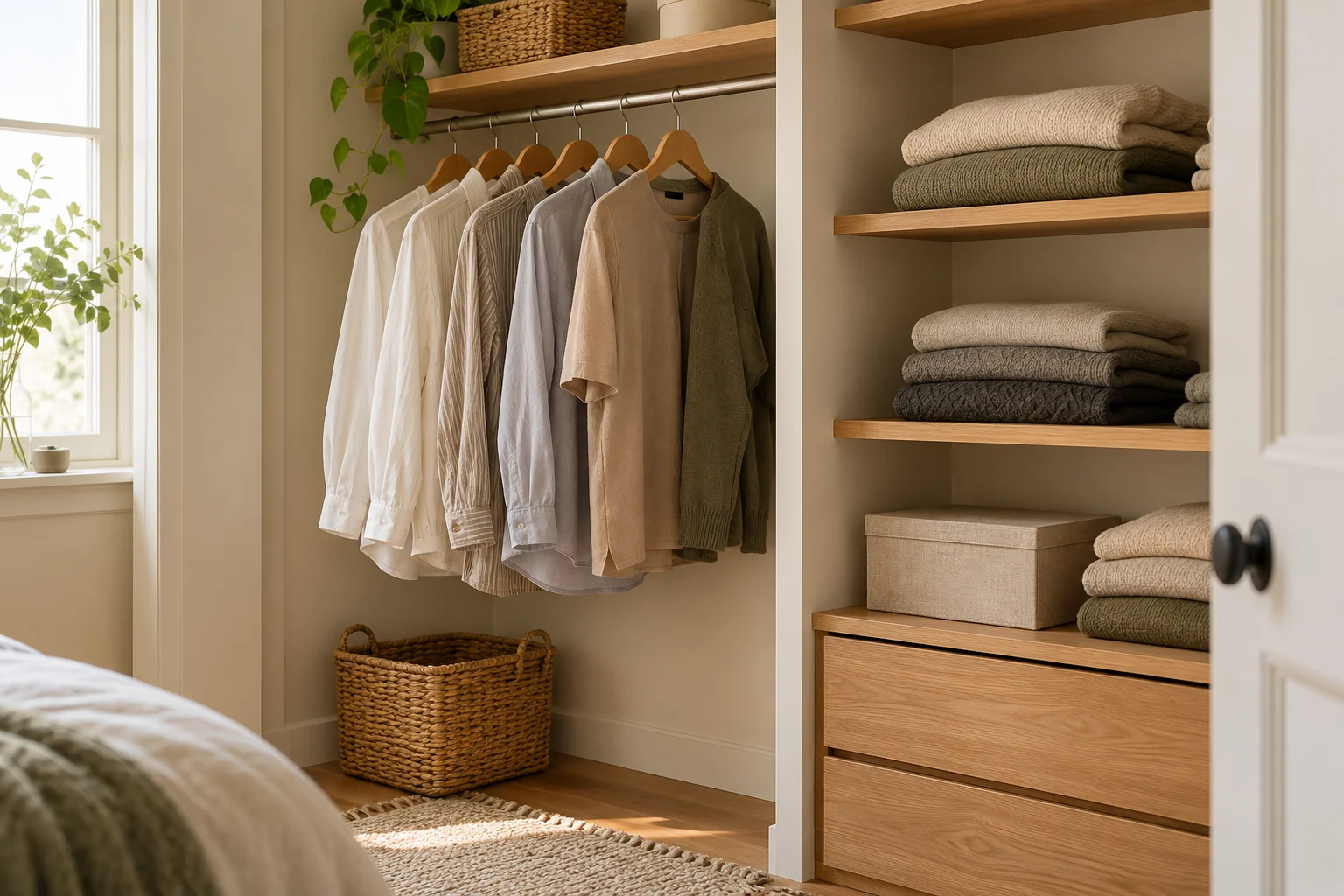
Compare both wardrobes
Count the categories each person uses and measure their hanging and folded needs. Equal rail lengths are not always equally useful, so discuss what each person needs to reach daily. Identify long garments and bulky seasonal pieces before dividing the remaining space. Keep individual decisions about releasing clothing with its owner.
Agree on recognizable zones
Give each person recognizable zones, and separate shared accessories or laundry supplies from those zones. Use the same basic container format if helpful, but allow different internal organization methods. Establish a small overflow rule so one person's temporary pile does not gradually occupy the other's section.
One person may need more long-hanging room while the other uses more drawers. Agreeing on those different needs can produce a fair arrangement without dividing every shelf and rail into identical halves.
Adjust around actual use
Try the arrangement through a full laundry cycle for both people. Adjust the boundaries if one category repeatedly has nowhere to return. A short review of actual use works better than policing whose side looks tidier or assuming one wardrobe should match the other.
About our editorial approach · Created with AI assistance.