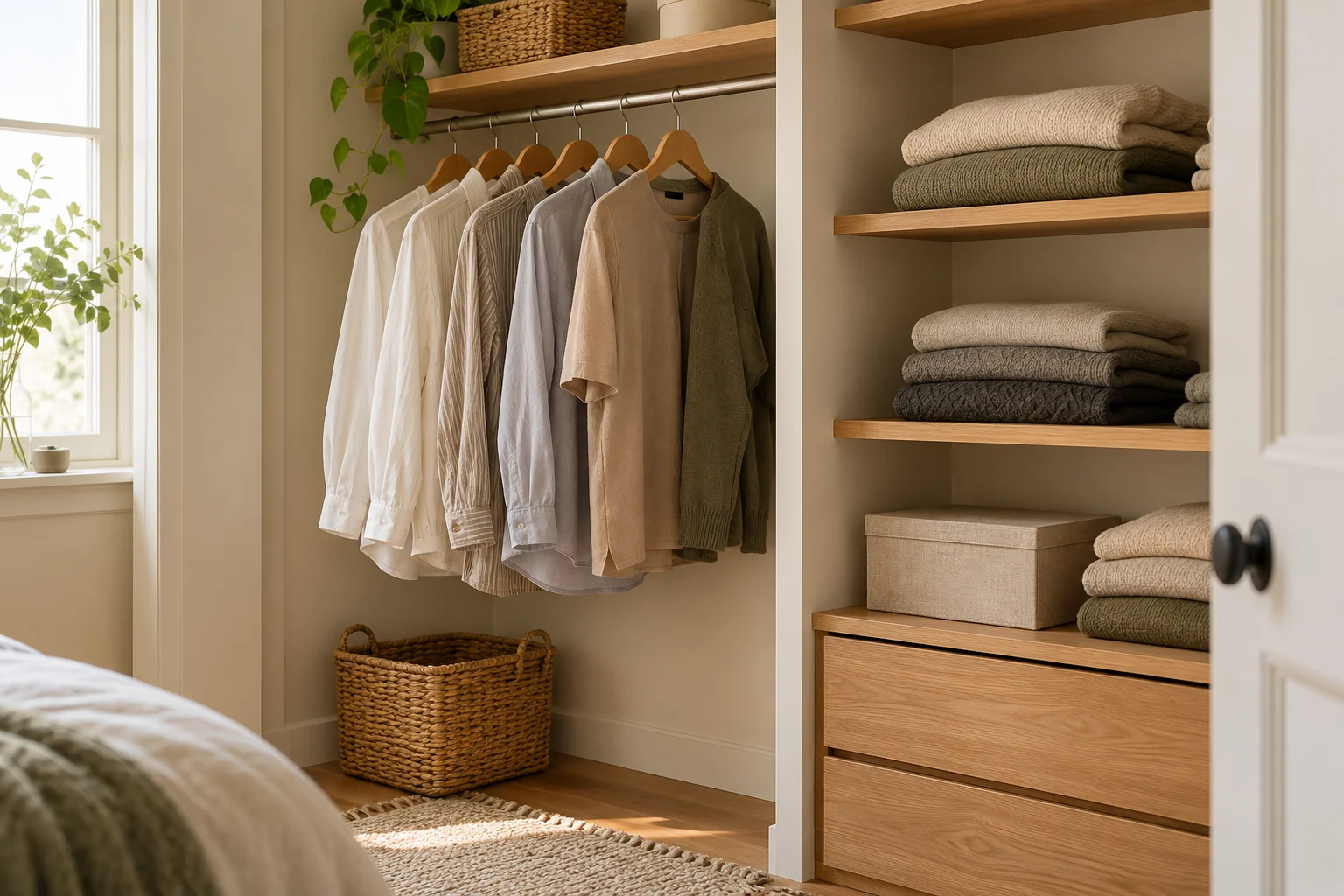
Measure usable zones
Divide the closet into hanging, shelf, drawer, and floor zones. Measure each usable section, excluding blocked corners and required clearance. Fill one zone with a representative group of clothes and test removal and replacement. Count that group only once the section feels workable in normal use.
Account for different garment bulk
Use those observations to estimate similar zones, while allowing for differences in garment bulk. A shelf of thin T-shirts does not predict a shelf of sweaters. Keep long-hanging clearance separate from short-hanging capacity. Avoid converting a single empty-hanger measurement into a wardrobe-wide percentage.
For a drawer, count the shirts only after the row can be searched and restocked comfortably. A compressed maximum count is a different measurement and should not be presented as everyday capacity.
Check a fully stocked closet
Check your estimate when all clean laundry and seasonal essentials are home. If the closet then becomes difficult to use, revise the capacity downward or redistribute categories. The most useful number is one that helps you plan realistically, not one that makes the storage sound impressive.
About our editorial approach · Created with AI assistance.