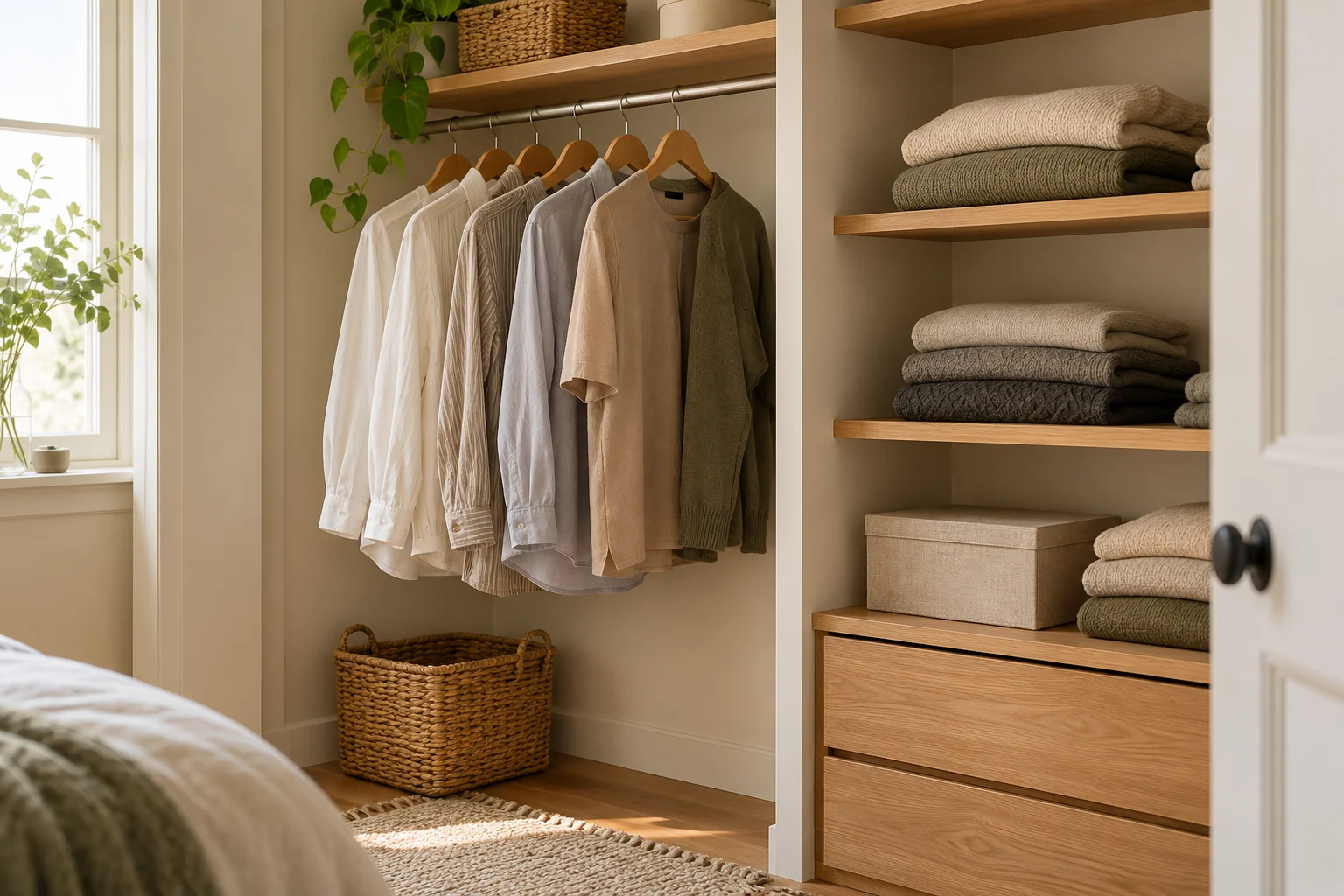
Measure your real folds
Fold representative garments in the way you would maintain during laundry return. Measure their footprint rather than using a theoretical fold. Check the available closet depth and how far you can reach. A shelf deeper than one row may create hidden storage that needs a deliberate purpose.
Decide how the rear is used
Choose whether the shelf will hold one visible row, shallow stacks, or removable containers. If you use a rear row, reserve it for occasional items and keep access straightforward. Avoid making every shelf deep merely because the wall cavity permits it. Door and rail clearance also matter.
If a shelf holds one visible row with a large unused rear area, do not automatically add another daily category behind it. Decide whether occasional storage belongs there or whether a shallower shelf would be more useful.
Test the proposed depth
Mock up the depth with a temporary board-sized outline or boxes before installation. Reach for the rear garment and return it while neighboring storage is full. If the movement requires unloading the front, reduce depth or change the category rather than accepting a permanently hidden layer.
About our editorial approach · Created with AI assistance.