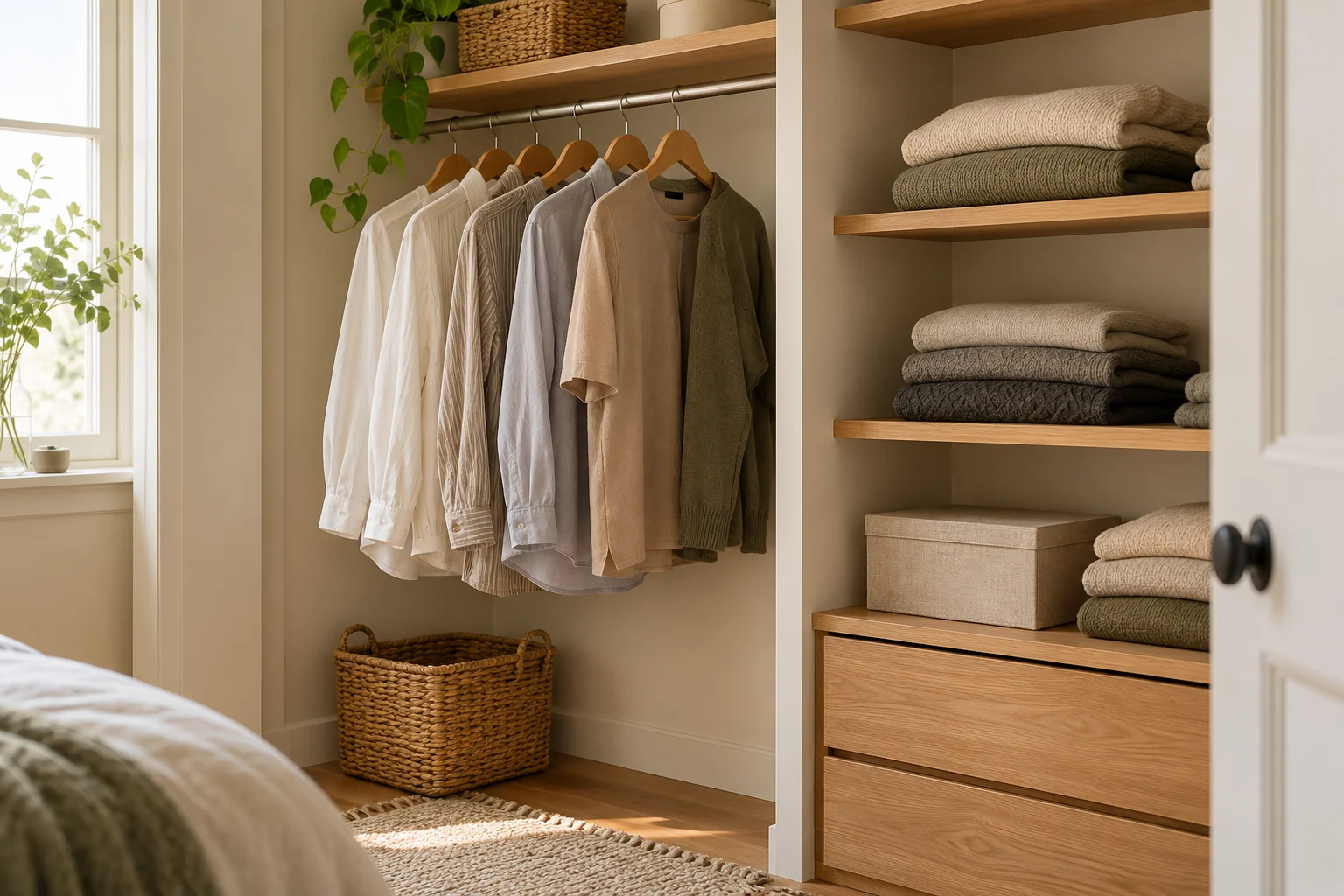
Measure a realistic hanging load
Measure the rail space occupied by a representative clothing load with comfortable retrieval clearance. Divide garments into long and short hanging groups. Check whether their hangers suit their construction rather than standardizing purely for appearance. Reserve drawers or bins for underwear, socks, and other small essentials.
Divide by length and frequency
Arrange rail sections around frequency of use. A double-hanging section can work for short garments if both levels remain accessible and hems clear the lower storage. Keep long pieces uninterrupted. Avoid extending hanging storage into the space needed to stand, open doors, or remove garments from the corners.
Use actual shirts on the proposed lower rail when testing double hanging. Empty hangers can conceal the collision between upper shirt hems and the garments or bar beneath them.
Check full-wardrobe access
Test removal from the fullest section with all normal clothing present. Keep empty hangers together and put clean laundry back before judging capacity. If the closet only works while several pieces are in the wash, increase usable space or reconsider the active selection.
About our editorial approach · Created with AI assistance.