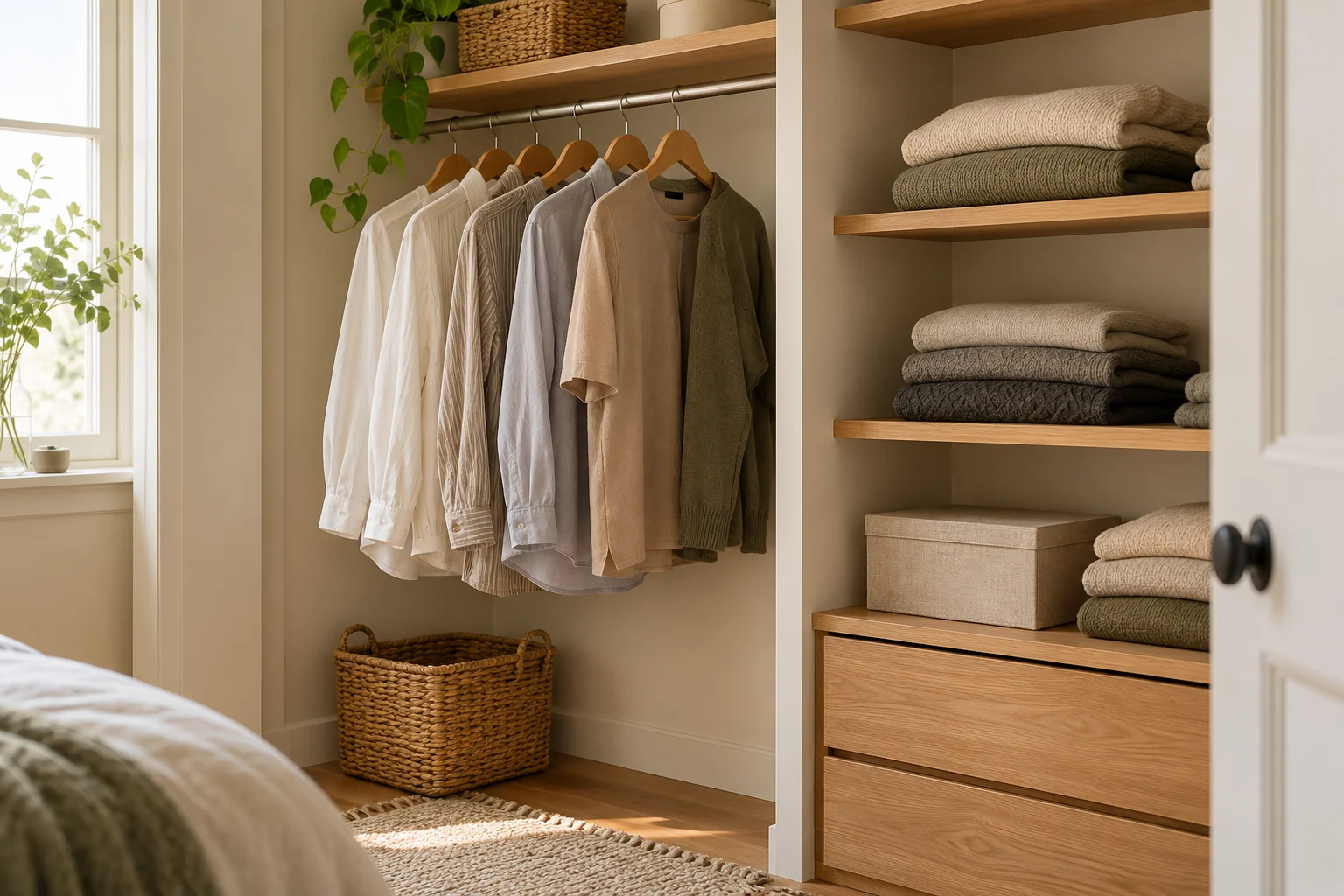
Match intervals to contents
Measure current folded stacks, bins, and footwear before choosing shelf intervals. Note categories likely to change with seasons or household needs. Compare the adjustment range and method with the intended contents. Follow the system's instructions for supports, loading, and secure placement after any change.
Keep adjustment practical
Set shelves around usable stack heights rather than leaving large gaps by default. Keep enough room to lift items out comfortably. Store spare fittings together so future adjustments are straightforward. Avoid building every section around one very specific container if you expect the wardrobe to evolve.
A winter sweater stack may need a taller interval than summer T-shirts. Adjustable shelves let you respond to that change without retaining oversized gaps throughout every compartment all year.
Review seasonal differences
After a seasonal change, review which compartments are crowded and which have excess height. Move one shelf only after measuring the new contents and checking neighboring access. The benefit is adaptable usable space, not the ability to create more subdivisions than you need.
About our editorial approach · Created with AI assistance.