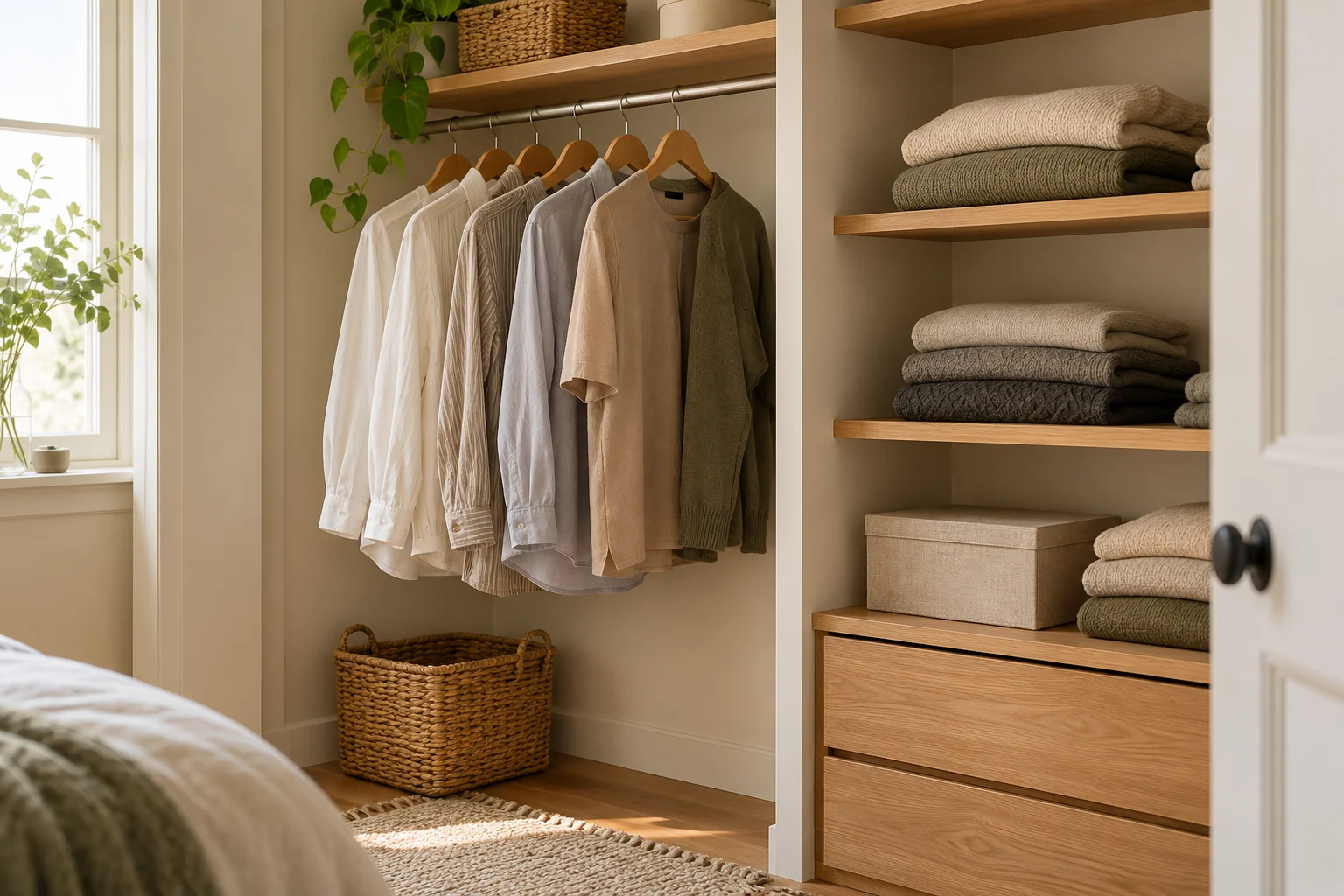
Prioritize current independence
Identify what the child can comfortably reach and manage now. Place everyday clothing there, using simple categories and readable or picture labels if helpful. Keep adult-managed or occasional items in a separate appropriate zone. Follow furniture anchoring and storage-system instructions rather than relying on the closet's apparent stability.
Allow the layout to change
Choose adjustable components where they suit the room and budget. Allow hanging heights and shelf spacing to change as garments grow. Avoid over-specialized compartments that only fit one stage of clothing. Include a clear place for laundry and a small, separate area for items awaiting a size review.
A picture label showing socks can help a young child return that category without reading. As needs change, replace the label and adjust the shelf rather than treating the original layout as permanent.
Let the child test it
Ask the child to choose an outfit and put clean clothes away with the system. Observe the steps that cause confusion and simplify them. Review the layout when clothing size or routines change, keeping decisions practical rather than expecting the same setup to work indefinitely.
About our editorial approach · Created with AI assistance.