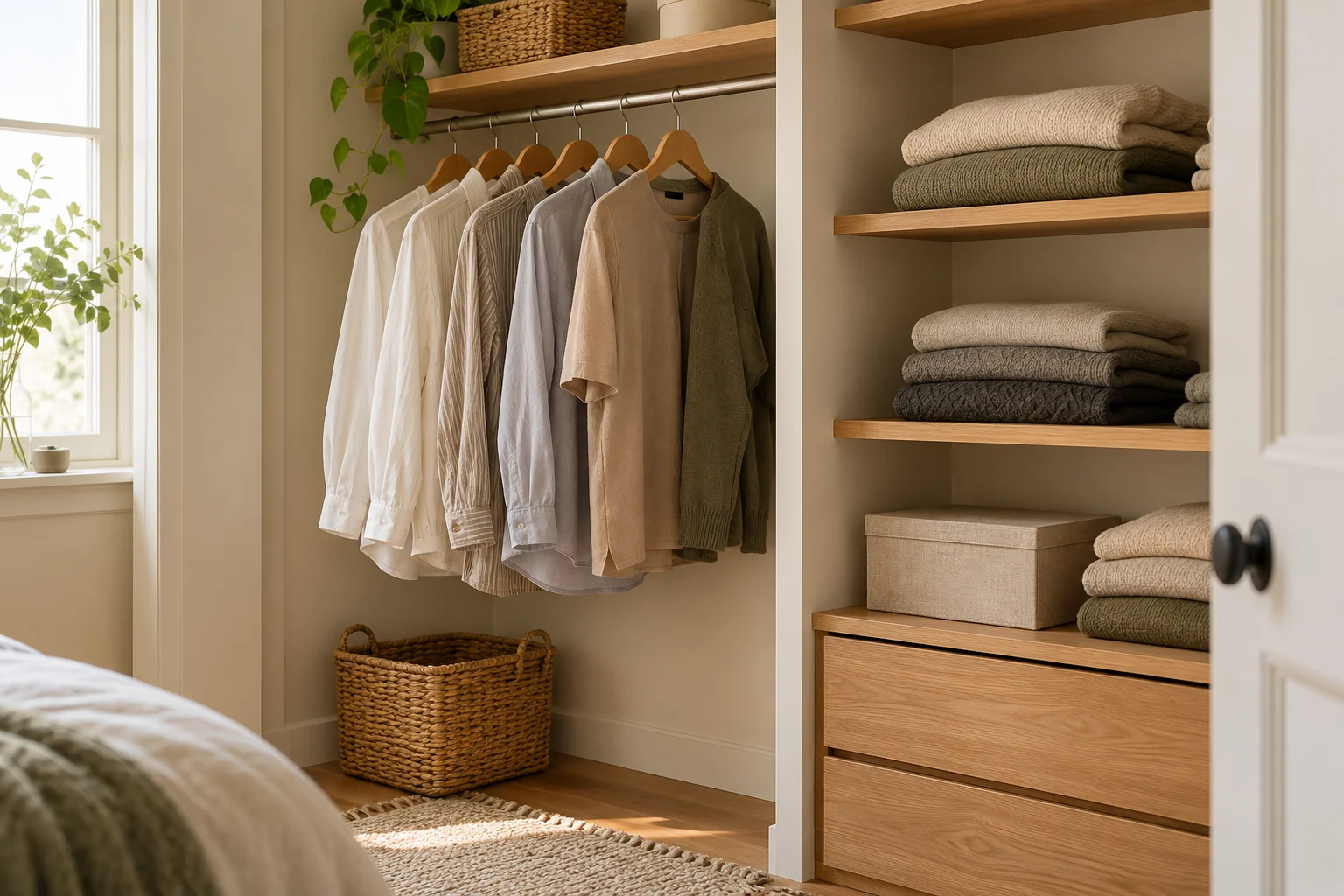
Describe the wardrobe and routine
Provide measured room dimensions, door movement, and photographs of the current storage. Include broad clothing quantities, longest hanging lengths, folded categories, shoes, and laundry needs. Explain who uses the closet and any reach preferences. List the specific problems you want the new design to solve.
Separate essentials from extras
Separate essential functions from optional features. Mention budget boundaries and whether future adjustment matters. Ask for usable interior dimensions, installation requirements, and a clear description of included components. Share what you already own that should fit, such as baskets or a particular long garment.
Include one photograph of the current problem, such as trousers blocking a drawer, alongside the dimensions. That concrete example gives the designer a functional issue to solve rather than only a preferred visual style.
Walk through the proposal
Review the proposed plan by walking through an ordinary morning and laundry return. Ask how corners, drawers, and high shelves will be accessed. A good brief makes those practical questions visible early, so the final design is based on your life rather than a generic display wardrobe.
About our editorial approach · Created with AI assistance.