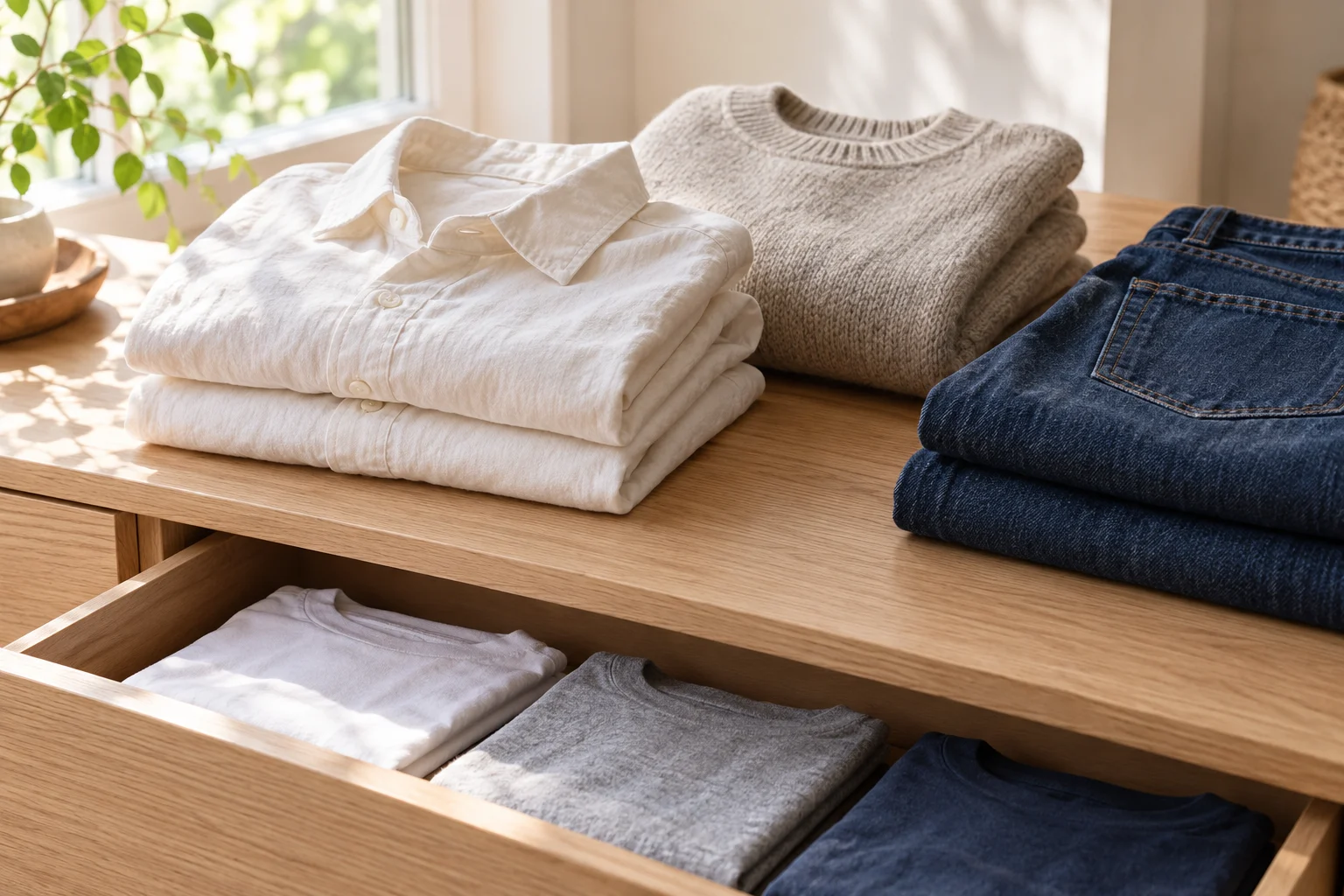
Separate shirts by use
A crisp button-down intended for work may be easiest to keep on a correctly sized hanger. A casual cotton T-shirt can fit neatly in a drawer with its front edge visible. Heavy knits and unusual silhouettes deserve their own assessment rather than being grouped solely by fiber content. Look at how each piece behaves after laundering and whether its current storage creates avoidable pressure or makes it hard to retrieve.
Make the return step simple
Place the everyday shirt category near the route from laundry to closet. On the rail, align hooks and leave enough space to slide garments apart. In drawers, use short rows rather than tall piles, and stop before the drawer requires force to close. Put freshly cleaned shirts behind the existing rotation if you want to avoid wearing the same few repeatedly. Follow each shirt’s care label for finishing, and let garments dry completely before enclosing them. Storage should preserve readiness rather than create another chore.
Further reading
About our editorial approach · Created with AI assistance.