Fabric-Specific Clothing Care
How to Store Wool Sweaters Between Wears
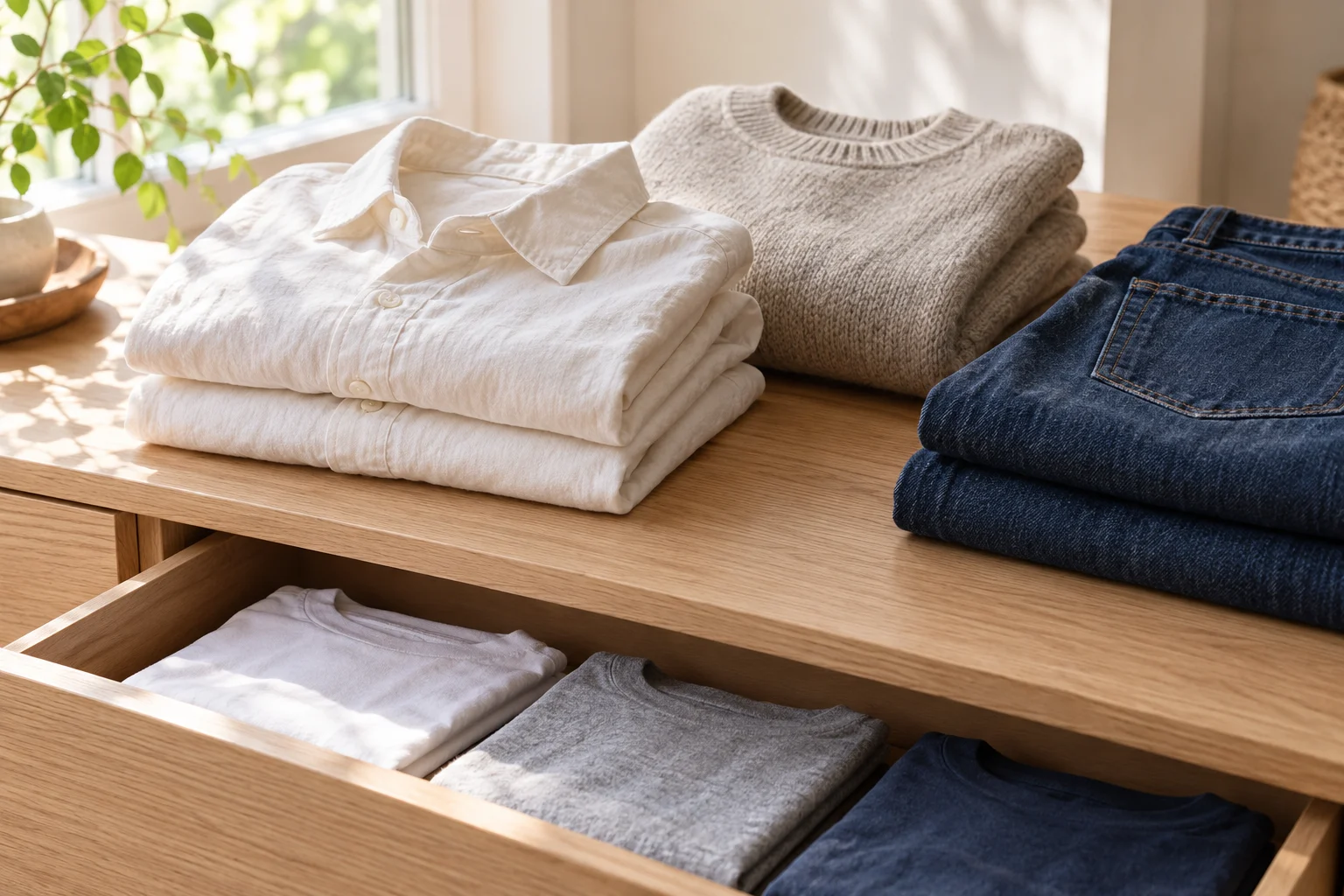
Give wool sweaters room to rest between wears without leaving their weight suspended from narrow shoulders.
Read the guideThe Toga Journal / The collection of guides
Practical ideas, clear steps, and thoughtful ways to care for your wardrobe.
500 guides · 25 topics · One useful place to start
20 guides in Fabric-Specific Clothing Care
Fabric-Specific Clothing Care
Give wool sweaters room to rest between wears without leaving their weight suspended from narrow shoulders.
Read the guideFabric-Specific Clothing Care
Cashmere care becomes easier in a small wardrobe when cleaning, resting, and storage each have an obvious place.
Read the guideFabric-Specific Clothing Care
Smooth contact surfaces and uncrowded storage help keep silk clothing easy to retrieve without unnecessary friction.
Read the guideFabric-Specific Clothing Care
Linen can look relaxed without looking neglected. Organize it around the finish you actually want to wear.
Read the guideFabric-Specific Clothing Care
Choose hanging or folding cotton shirts according to their construction, how soon you wear them, and your available storage.
Read the guideFabric-Specific Clothing Care
Denim care works best when washing decisions reflect the garment’s condition and label, not a fixed internet rule.
Read the guideFabric-Specific Clothing Care
Synthetic fiber names are useful clues, but the garment’s shape, finish, and care label should guide its storage.
Read the guideFabric-Specific Clothing Care
Viscose and rayon garments need an individual care plan, particularly when washing and handling them while wet.
Read the guideFabric-Specific Clothing Care
Velvet storage should protect its surface from unnecessary pressure while supporting the garment underneath.
Read the guideFabric-Specific Clothing Care
A leather jacket needs suitable shoulder support and storage that does not turn a damp or crowded closet into its permanent home.
Read the guideFabric-Specific Clothing Care
Suede deserves a storage position where its surface is not repeatedly rubbed against neighboring hardware or exposed to dampness.
Read the guideFabric-Specific Clothing Care
Sequined clothing needs protection for both its decoration and the plain fabrics stored beside it.
Read the guideFabric-Specific Clothing Care
Pleated skirts are easier to maintain when you know whether their folds are part of the fabric’s finish or require careful pressing.
Read the guideFabric-Specific Clothing Care
Stretch garments should rest without having waistbands, straps, or shoulders held under unnecessary tension.
Read the guideFabric-Specific Clothing Care
Lace and delicate mesh need a clear path through the closet, with fewer opportunities to catch on hooks or rough surfaces.
Read the guideFabric-Specific Clothing Care
A structured blazer needs storage that supports its shoulder shape and keeps its lapels from being compressed.
Read the guideFabric-Specific Clothing Care
A down jacket’s seasonal storage plan should allow thorough drying and avoid treating a travel packing pocket as its permanent home.
Read the guideFabric-Specific Clothing Care
Fleece fits more comfortably in a closet when its bulk is planned for rather than compressed into the last available drawer.
Read the guideFabric-Specific Clothing Care
A blended fabric does not come with one universal care method. The finished garment’s instructions are the starting point.
Read the guideFabric-Specific Clothing Care
A useful fabric-care reference describes the clothing you own, so it can answer real laundry questions quickly.
Read the guide