Compare the clothing first
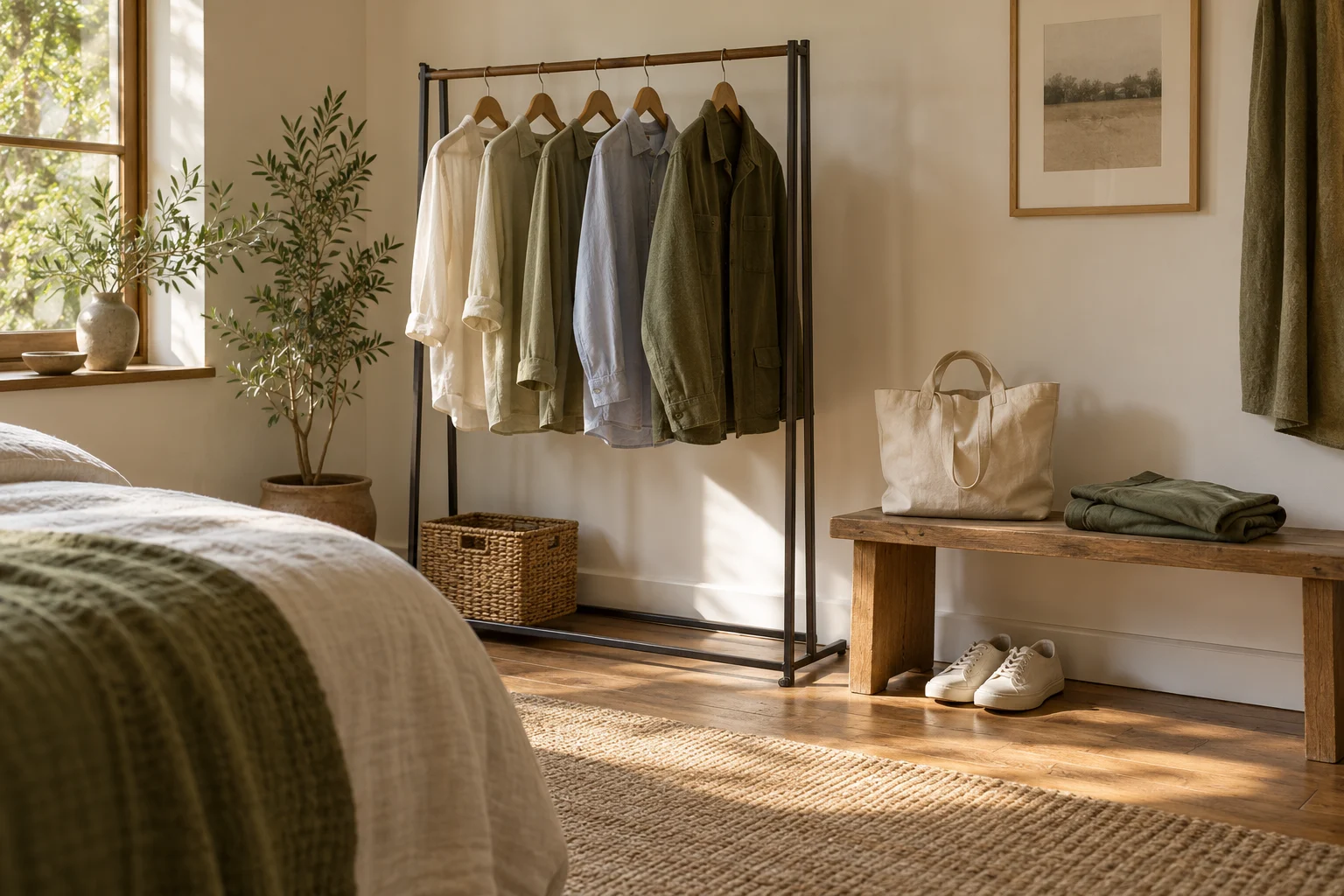
Each person should identify daily clothes, long garments, folded categories, and occasional pieces. Measure the space those groups need with suitable supports and reasonable retrieval room. One person may need more hanging length while another needs drawers. Discuss which areas are easiest to reach and whether either person has particular access requirements. Keep the conversation about practical use rather than who owns the more acceptable number of clothes.
Agree and revisit
Assign clear personal zones and identify any genuinely shared storage. Decide how spare hangers, laundry put-away, and seasonal overflow will work. Avoid moving or discarding another person’s belongings without agreement. Trial the arrangement through an ordinary week and note where access feels crowded or a category has no clear home. Revisit the allocation after a season change or major wardrobe change. Fairness is an ongoing agreement about workable space, not a permanent line that must stay unchanged even when the people using it have different needs.
Try a needs-based division
For example, one person might use most of the long-hanging section for dresses while the other uses more drawer space for folded clothing. That arrangement can be fair even when the rail lengths are unequal. Write down the shared expectations about overflow and spare hangers, then review the trial together. A visible agreement prevents an uneven-looking allocation from being mistaken for an unspoken claim to the entire closet.
About our editorial approach · Created with AI assistance.