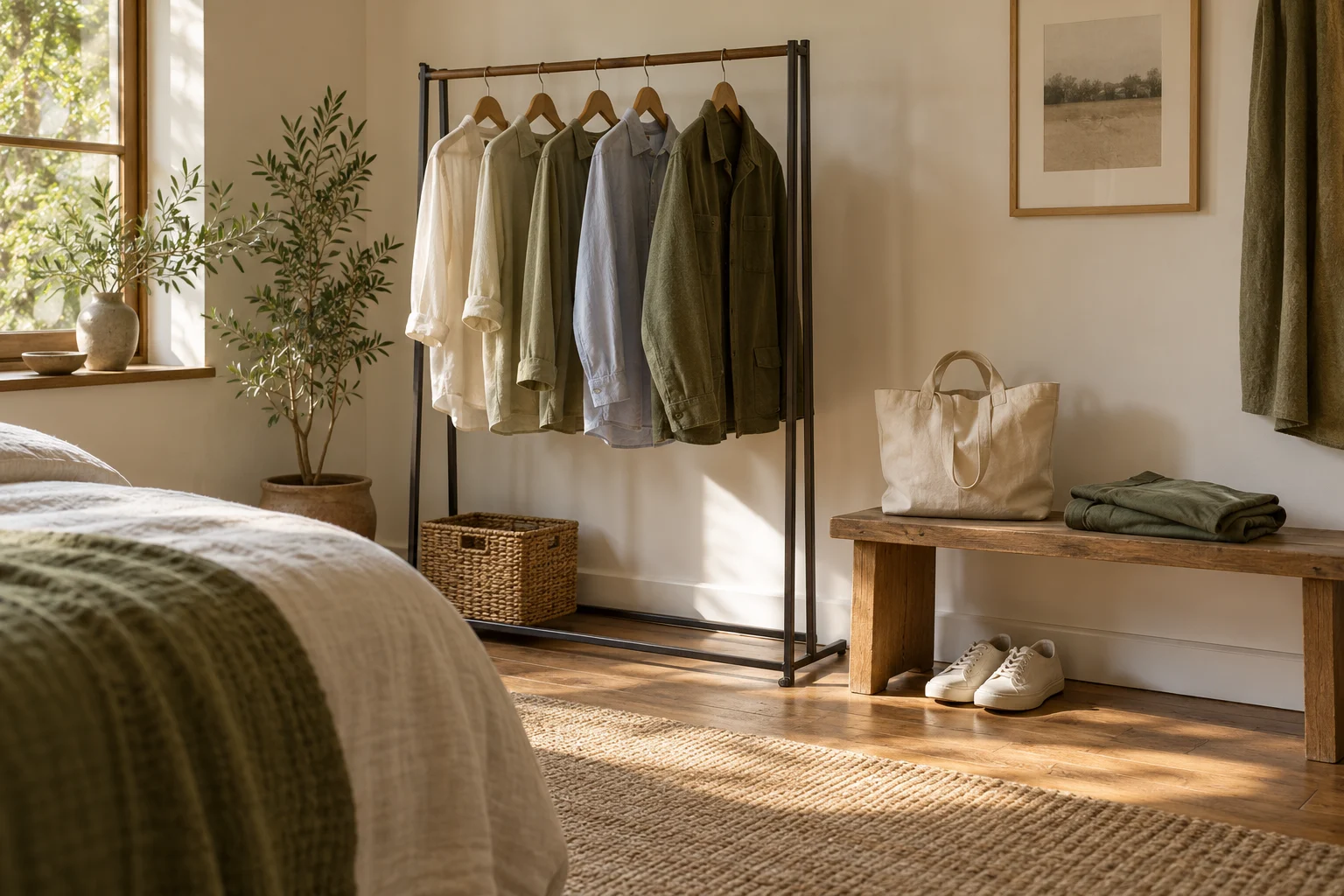
Map comfortable reach
Have each person identify the shelves, drawers, and rail sections they can use comfortably during normal dressing. Include the movement needed to lift a hanger off the rod and return it, not just touch the garment. Keep frequently used clothing in the person’s useful range and reserve less accessible areas for occasional items handled appropriately. Avoid assuming the taller person should automatically manage every difficult retrieval.
Adjust without overcommitting
Try moving categories before installing new hardware. A lower shelf may suit one person’s folded tops, while a different rail section works for another’s shirts. Ensure any furniture or adjustable system is installed and used according to its instructions. For structural changes or more complex access needs, seek appropriate professional input. Review the arrangement with actual laundry put-away as well as outfit selection. The system is successful when each person can perform the tasks they want to do comfortably, without a layout that creates unnecessary dependence or awkward repeated reaching.
Check the return with a loaded hanger
Ask each person to put away a familiar shirt in the proposed position. Notice whether the hand can guide the hook over the rod while supporting the garment, and whether nearby clothing blocks the movement. Then test a folded item in the assigned drawer. These short trials reveal more than a measurement of maximum reach, because real storage requires control, clearance, and a comfortable return action as well as simple access.
About our editorial approach · Created with AI assistance.