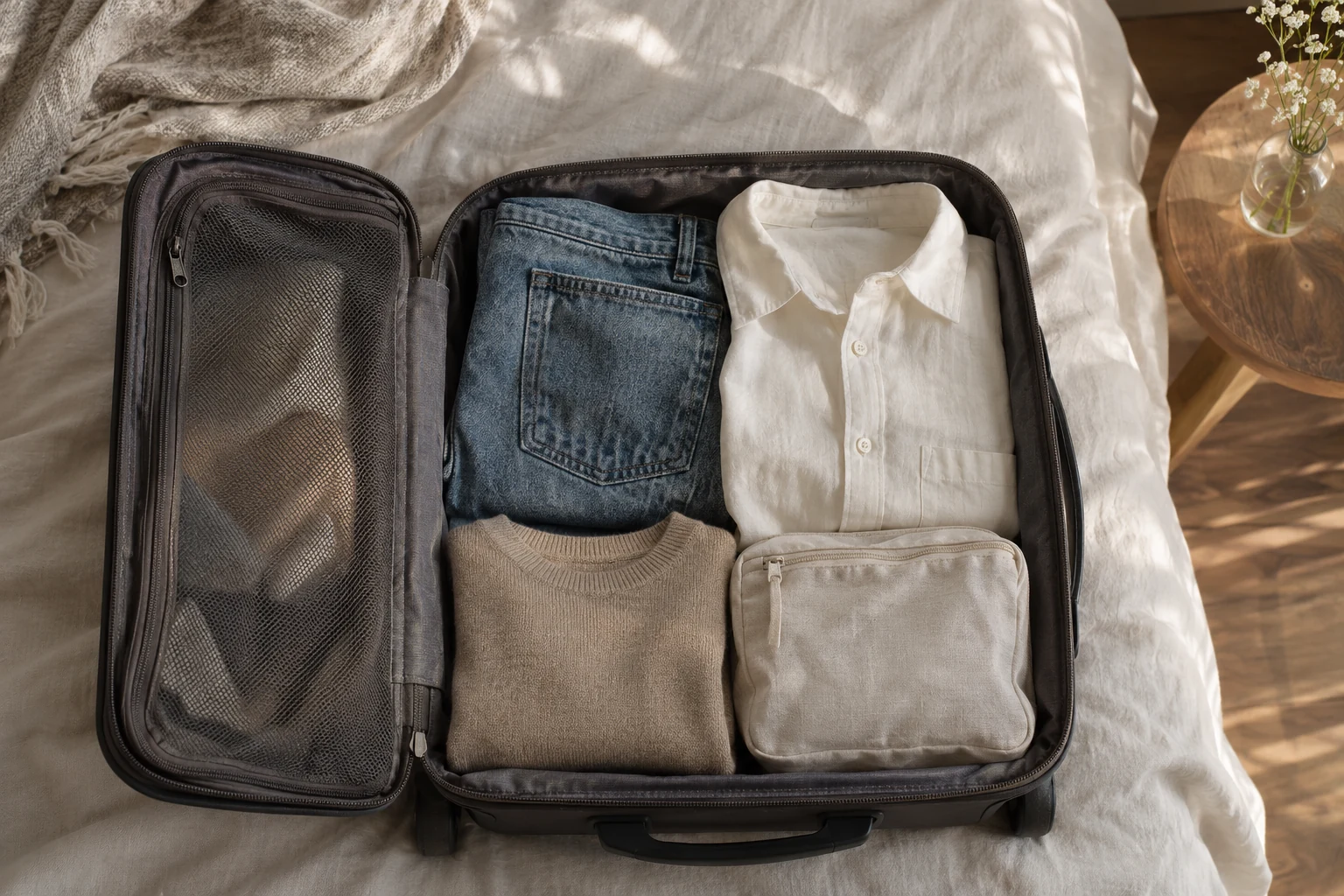
Pack for the first ordinary morning
During a move, a clearly packed first-night kit can prevent a search through several boxes for one essential garment. Think about the evening you arrive and the following morning: sleepwear, underwear, an appropriate outfit, and any clothing needed for work, school, or the move itself. Include the shoes and small accessories that make those pieces usable.
Choose a familiar bag and keep it with the items you control during the move. Do not label it only miscellaneous, which makes its purpose easy to forget.
Make the kit independent
Assume the wardrobe may not be assembled and the laundry area may not be ready. Pack the kit so that you can access it without needing a shelf, organizer, or a specific hanger. Fold clothing appropriately for the short journey and keep anything with special care needs distinct. Avoid placing cleaning products or tools in the same compartment.
If several people are moving together, give each person's clothing a clearly identified section or bag. That avoids unpacking another person's belongings while everyone is tired.
Use it to set priorities
Once you arrive, find a clean temporary place for the kit and establish where worn clothing will go. Set up enough storage to support the next few days before unpacking the entire wardrobe. This creates a working routine while the larger decisions about shelves and rails remain unfinished.
After the first week, empty the kit back into the normal wardrobe. Do not let an emergency bag become an indefinite second storage system. Keep a short list of what was genuinely useful so the next move or overnight disruption requires less thought. A small, complete kit usually provides more immediate value than opening every clothing box at once.
About our editorial approach · Created with AI assistance.