Measure the usable opening
The inside width of a wardrobe is only one of the dimensions a storage container must fit. Open the doors as you normally would and measure the clear passage between the door edge, hinges, and opposite side. A sliding panel may cover part of the cabinet even when fully open. A handle or folded door can narrow the route at a different height.
Write down both the shelf dimensions and the opening dimensions. Label them clearly rather than keeping two similar numbers in your head while shopping.
Trace the movement
Use an empty cardboard box close to the proposed size to test the path. Pull it toward you, turn it if necessary, and lift it to the surface where you would sort its contents. Do this without leaning the box against hanging clothing. A container that can be inserted only while empty may become frustrating once loaded.
Check any lid separately. A hinged lid needs room above and behind the box; a removable lid needs somewhere to sit. For pull-out hardware, use the manufacturer's clearance and installation requirements rather than treating the test box as an engineering specification.
Allow for real contents
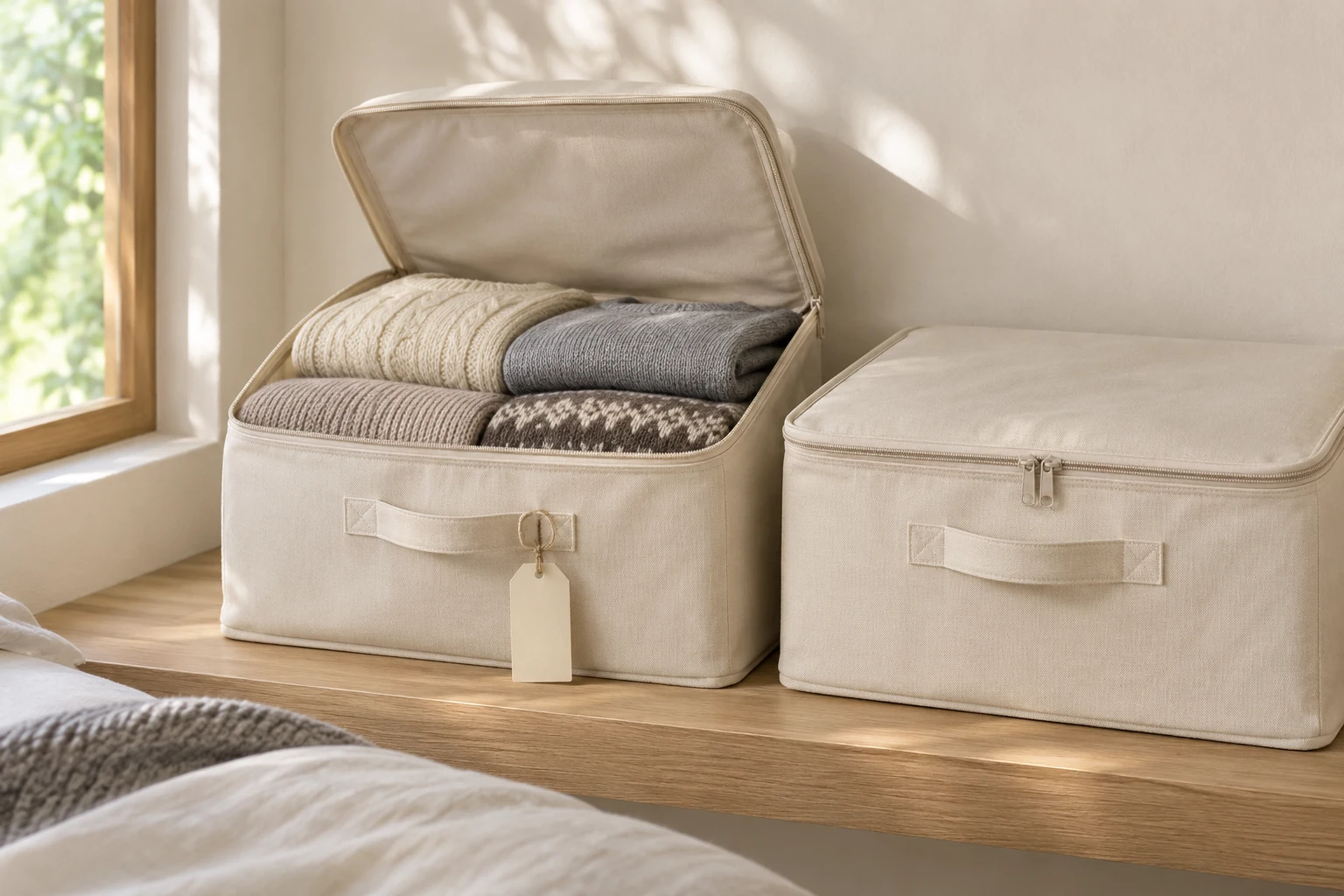
Soft bags and overfilled baskets bulge beyond their listed dimensions. Handles also need room for fingers. Leave practical handling space instead of aiming for a friction fit that uses every available millimeter. Measure with neighboring storage in place, including the garments whose sleeves overlap the shelf.
Before ordering several matching units, try one where possible. Fill it with the actual category, remove it, and put it back. If the path is awkward, a shallower container or two smaller groups may serve you better than a deeper box with more nominal capacity.
About our editorial approach · Created with AI assistance.