Shared Closets and Accessible Routines
How to Reduce Reaching in a Closet
Reducing reaching means bringing the things you use most into a manageable area and checking the movement needed to return them.
Read the guideIdeas for a calmer closet, clothes that get the care they need, and a little more space for living.
520 guides · 25 topics · One useful place to start
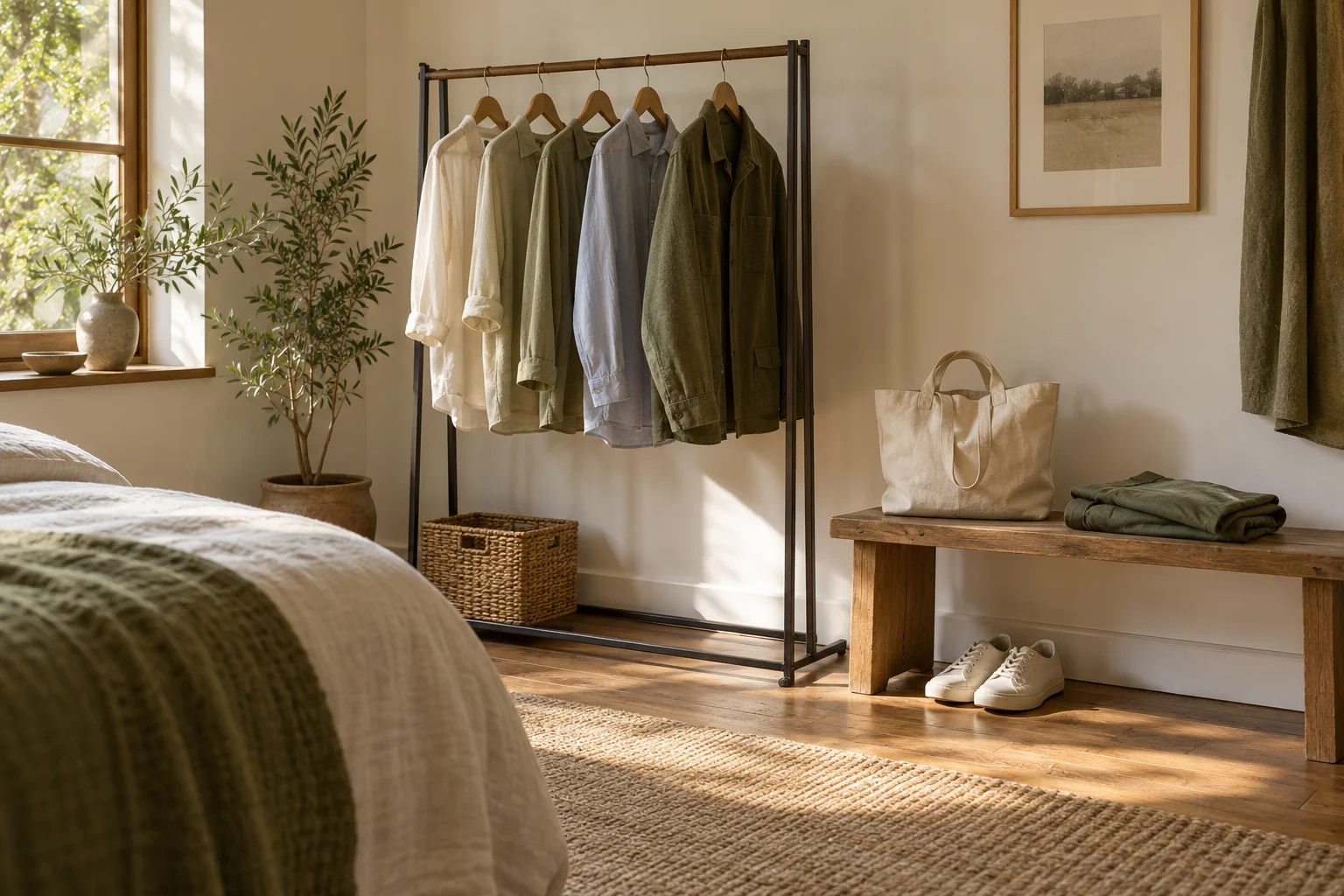
 AI-generated editorial illustration
520 guides
Shared Closets and Accessible Routines
Reducing reaching means bringing the things you use most into a manageable area and checking the movement needed to return them.
Read the guideShared Closets and Accessible Routines
Reducing bending starts with moving frequent tasks into a comfortable range, not simply raising every storage container.
Read the guideShared Closets and Accessible Routines
A shared closet can accommodate different heights by giving each person suitable daily access rather than one universal rail level.
Read the guideShared Closets and Accessible Routines
A fair shared closet reflects actual storage needs, access, and agreed boundaries rather than automatically splitting every rail in half.
Read the guideFamily, Kids, and Baby Clothing
Teaching clothing put-away is easier when the task has a few repeatable steps and the storage is physically manageable.
Read the guideFamily, Kids, and Baby Clothing
Growth-spurt planning works best with a limited next-size reserve and regular fit checks, not a large stockpile of predictions.
Read the guideFamily, Kids, and Baby Clothing
Keepsake baby clothes deserve a separate home from active clothing, with a simple record of why each piece matters.
Read the guideFamily, Kids, and Baby Clothing
Split-household clothing routines work best with a clear transport method and agreed expectations, without assuming both homes operate identically.
Read the guideFamily, Kids, and Baby Clothing
An outgrown-clothes station should support regular decisions without becoming a second overflowing closet.
Read the guideFamily, Kids, and Baby Clothing
A clothing label helps only if the child can recognize it and use it during an ordinary put-away task.
Read the guideFamily, Kids, and Baby Clothing
Children’s small accessories need broad, visible categories so finding a pair does not require emptying the whole drawer.
Read the guideFamily, Kids, and Baby Clothing
A family coat closet needs personal access, clear wet-weather handling, and enough room to remove one coat without pulling down several.
Read the guideFamily, Kids, and Baby Clothing
Postpartum clothing organization should make comfortable options easy to reach without turning storage into a timetable for body changes.
Read the guideFamily, Kids, and Baby Clothing
Maternity clothing storage benefits from flexible groups that follow comfort and current use rather than a fixed calendar.
Read the guideFamily, Kids, and Baby Clothing
A teen’s closet is more likely to stay workable when its owner helps decide the categories and level of organization.
Read the guideFamily, Kids, and Baby Clothing
A weekly outfit station can reduce morning searching, provided it allows weather changes, preferences, and ordinary disruptions.
Read the guideFamily, Kids, and Baby Clothing
A children’s seasonal rotation should include a fit check, so storage does not preserve clothes that will never be worn again.
Read the guideFamily, Kids, and Baby Clothing
Sports uniforms are easier to manage when every required piece has a clear path from the game to the next ready set.
Read the guideFamily, Kids, and Baby Clothing
Dress-up storage should invite play and make cleanup possible without treating every costume like everyday clothing.
Read the guideFamily, Kids, and Baby Clothing
Shared children’s storage needs recognizable personal zones and a separate plan for items that truly belong to both siblings.
Read the guideFamily, Kids, and Baby Clothing
School uniforms need a visible rotation that connects clean storage, repairs, and the next school day.
Read the guideFamily, Kids, and Baby Clothing
A child’s closet works better when the everyday choices are visible, reachable, and simple enough to return independently.
Read the guideFamily, Kids, and Baby Clothing
Hand-me-downs are most useful when size, season, and condition can be checked before the intended wearer has outgrown them.
Read the guideFamily, Kids, and Baby Clothing
Baby clothes are easiest to use when the current fit is visible and future sizes do not crowd the daily drawer.
Read the guide